Back to Basics: Why Open Blockchains Still Matter
A reminder of the core promises that brought us into crypto, and why Tezos has been quietly protecting and building on them all along
7 minute read
Think back to your first real interaction with crypto.
Not buying on an exchange, but actually using it. Creating a wallet, writing down a seed phrase and sending a small amount just to see if it works. That moment when you realised there was no bank in the middle, no approval screen, no “processing might take 3–5 business days”.
It felt simple and powerful at the same time. Value moved because you said so and signed for it, not because an institution allowed it.
Over the years, the space got crowded with prices, narratives, and the constant hunt for the next big thing. Perfectly normal for an open market, but it shifted the focus away from that original spark: decentralisation, permissionless access, and real ownership.
Those ideas didn’t age out. They didn’t break. They’re just quieter than the noise around them.
With this article, I want to bring that focus back to the surface. Not as nostalgia, but as something practical and actionable. A reminder of what public blockchains actually let us do, and how on Tezos those original promises aren’t theoretical ideals but working foundations you can use, build on, and shape today.
Move value on your own terms #
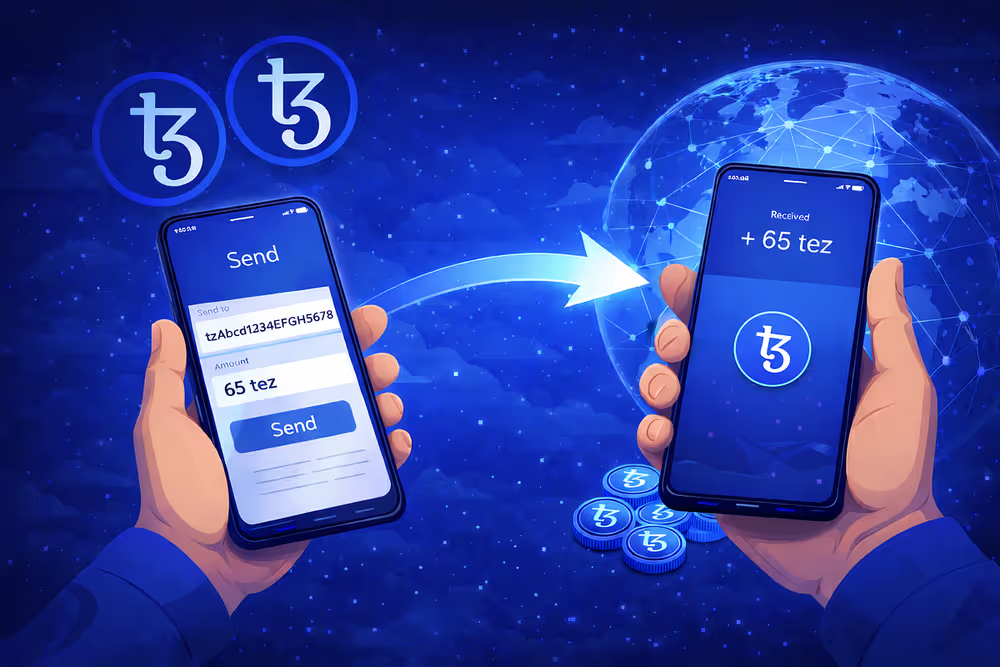
One of the simplest but most powerful things crypto unlocked was the ability to just send value to another person, directly.
No bank transfer forms.
No waiting for Monday morning.
No intermediary holding the funds in between.
On Tezos, that experience is exactly that straightforward. You open your wallet, enter an address, sign the transaction, and the network takes care of the rest. A few moments later, the funds are in the other wallet with final on-chain settlement.
What matters here isn’t speed for the sake of speed. It’s control. The transaction happens because you authorised it, not because an institution processed it or “allowed” it. You can move one tez or millions in seconds, with near-zero fees, whenever you decide to.
And that same control applies while your funds are sitting still. Your tez live under your keys in your wallet, not in a bank or exchange account that can pause withdrawals or set limits. You can hold them, move them, or put them to work through staking while never giving up custody.
This was the whole point. Not faster trading, but the simple fact that if you decide to move your money, it moves.
Build and use without asking for permission #
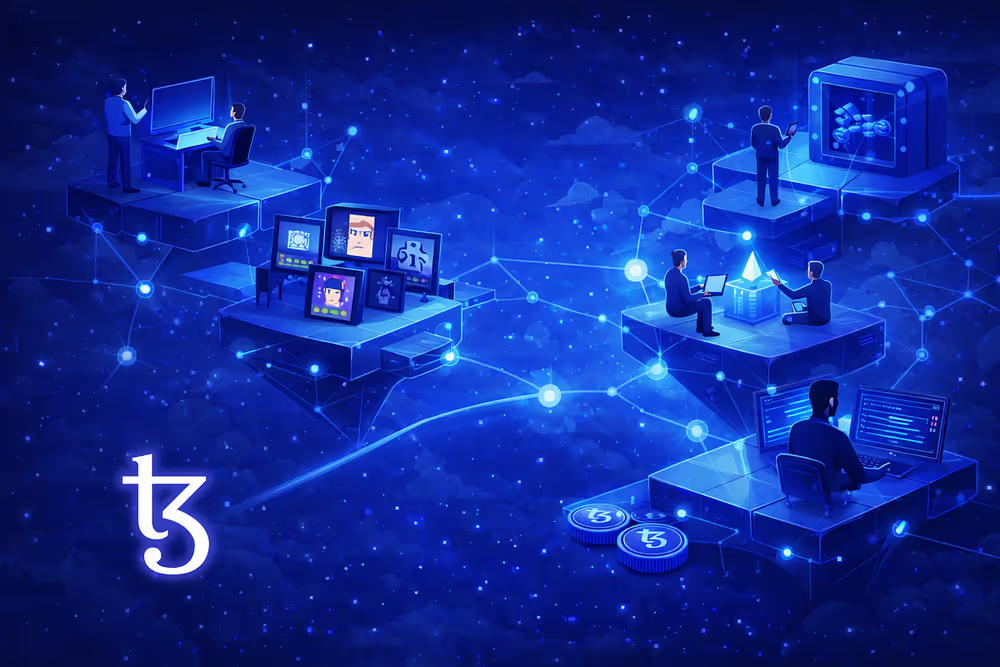
Sending value is the first step. Being able to build on top of that value is where things really open up.
On Tezos, there is no application process to launch something new. You don’t ask a company to list your token or host your app. If you deploy a smart contract and it follows the network rules, it goes live, and anyone can use it.
That one rule creates a level playing field. The chain doesn’t know who you are, where you’re from, or how much money you have. It only checks whether your transaction is valid. If it is, it gets included. No origin checks, no status tiers, no hidden filters.
Because of that, access starts from the same point for everyone. You connect a wallet, and you can interact directly with what’s been built on the network, without account approvals or regional gatekeeping.
You can be an artist from the US, Brazil, Nigeria, or China and sell your work on Objkt, Teia, and similar platforms using the same contracts as everyone else. The same applies for DeFi, you can jump into opportunities you find and participate freely. Your location doesn’t change your access and no central party gets to decide if you’re allowed in.
And if what you want doesn’t exist yet, you don’t need anyone’s blessing to create it. A solo developer hacking on a weekend and a full team launching a product both deploy to the same public chain under the same rules.
A network that listens to its users #

Open access is powerful, but on Tezos, participation doesn’t stop at deploying apps and using them.
The usual story in tech is upgrades decided by a small group, pushed out to everyone else, and if enough people disagree, you end up with splits and competing versions. Crypto has seen that movie more than once.
Tezos takes a different route. Changes to the protocol are proposed, voted on, and activated on-chain by the very participants who use and secure the network. Upgrades aren’t backroom decisions or social media campaigns, they’re part of the protocol itself.
That means new features and improvements can land without forcing everyone to migrate to a “new chain” or pick sides in a fork. The network updates itself as one shared system. This turns users into participants. By staking or delegating, you’re not just helping secure the chain and earn rewards, you’re also part of the decision-making process that shapes its future.
And if you want to go even deeper, you can. The validation of the chain isn’t reserved for a fixed, preselected group, as we see on many other chains. Anyone who meets the minimum protocol requirements can become a baker and produce blocks. You’re not just allowed to use the network, you’re allowed to run it.
This is what real accessibility at the network level looks like. Not just interacting with the system, but having both a voice in its direction and the option to take part in securing it.

This isn’t about waiting for some future upgrade to finally make crypto useful. The core value of an open blockchain was always much simpler than that. It’s the simple guarantee that anyone can join, use it, build on it, and even help run it under the same rules as everyone else.
Many chains started from that idea. Over time, some bent those rules for convenience, speed, or control. Others kept the rules simple and stubbornly open.
Tezos has always taken the second path. Upgrades didn’t come at the cost of openness. New use cases didn’t require closing doors somewhere else. The network changed over time, but the core promises stayed intact: self-custody, permissionless access, open participation, and on-chain governance.
That’s the real point of going back to basics. Not to claim something no one else has, but to remember why these properties matter and to notice where they have been consistently protected instead of quietly traded away.
If you want a chain where you can just use it, build on it, validate it, and vote on its future without asking anyone for the job, Tezos is already set up that way.
Not as a future promise, but as a design choice it has been quietly sticking to all along.