Can a Blockchain Be Both Old and New?
The difference between being old… and being stagnant.
5 minute read
It has been almost a month since we celebrated the Tezos mainet’s 8th birthday, and in about 2 months (September 2nd), we will be celebrating 12 years since the Tezos whitepaper. This inevitably got me thinking about a question. Is Tezos old?
I mean, think about it. Over a decade since the Tezos idea was conceived. Especially for the crypto space, this is a lot of time. So what does that actually mean? Is Tezos simply one of crypto’s older blockchains, or is there more to the story?
“Old” doesn’t mean outdated. #
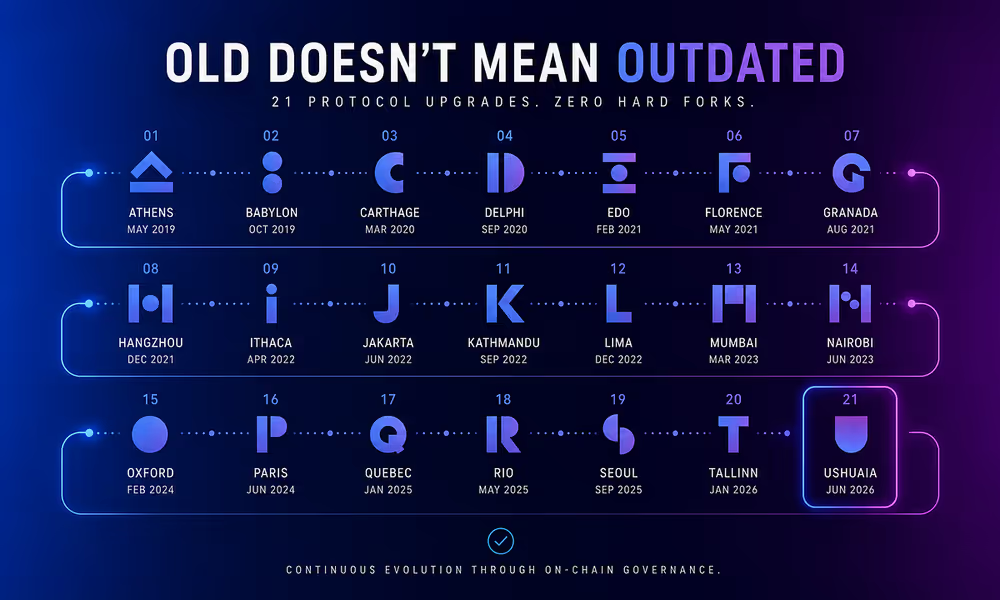
In crypto, “old” is rarely seen as something good. People’s minds immediately go to Bitcoin, Ethereum, and all those first-generation blockchains that either evolve too slowly or don’t evolve at all. And especially when you see all the new shiny chains promising crazy fast speeds, new architectures, and revolutionary ideas, you just think, there’s no way these old “dinosaurs” can keep up with the evolution.
But I think that’s the wrong way to look at it. Old doesn’t have to mean outdated. Especially when we talk about software, cause at the end of the day, that’s what blockchains are. Software.
Take Linux for example, it has been around for almost 35 years, powering everything from smartphones and cloud infrastructure to supercomputers. Or Git, which has also been used for over 20 years by millions of developers and still remains the industry standard. They are old, but would you say they are outdated?
I think you are getting my point here, being “old” is not necessarily a bad thing, what is actually bad is being stagnant. In fact, time can be one of the biggest advantages a piece of software has. It gives it the opportunity to mature, learn from mistakes, adapt to changing needs, and prove itself over time. And I think Tezos falls exactly into that category.
Born in a Different Era. #
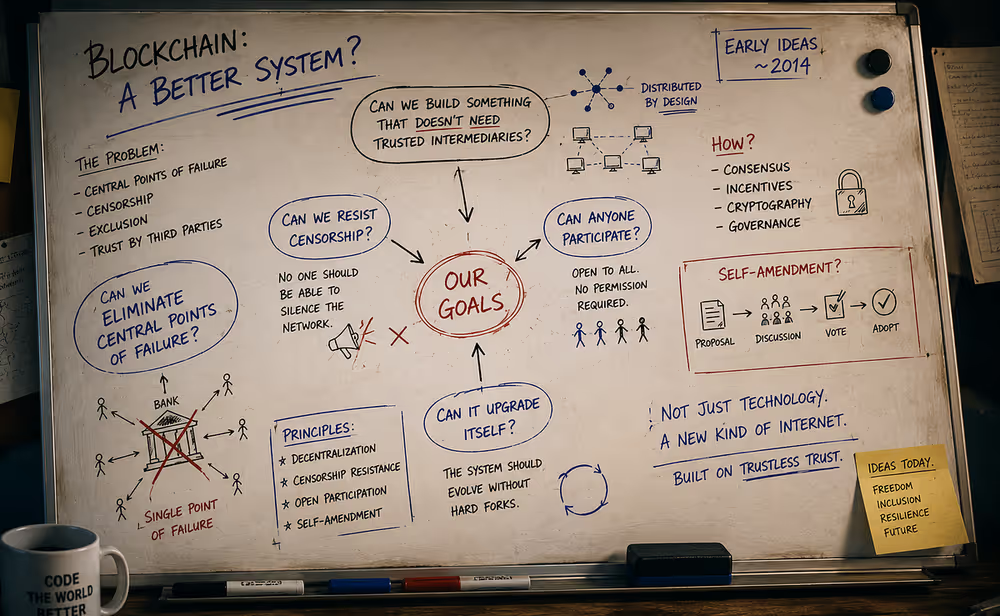
When Tezos was conceived, more than 12 years ago, crypto was in a completely different chapter. Back then, the biggest questions weren’t about rollups, scalability, sub-second speeds, and modular architectures. They were much more fundamental. Can we avoid central points of failure at all levels? Can we avoid censorship? Can it be open and accessible for everyone?
Those weren’t just nice-to-have features. They were the ideals that the whole crypto and blockchain space was created for, and Tezos was built with those same ideals embedded into its DNA.
It’s not hard to see that the current state of the space has drifted far from these fundamentals. We see so many new blockchains launching with totally different problems in mind, like scaling, interoperability, user experience, etc. Now don’t get me wrong, these are also very important problems that need to be solved if we want to see any serious adoption of the space, but the issue is that in order to solve them, many times people end up compromising the very things that blockchains were made for.
If you only care about speed and throughput, and not about decentralization and censorship resistance, then why even use a blockchain? You already have that on every Web2 platform that runs on centralized servers.
And honestly, that’s the interesting part about Tezos. While it never lost its fundamentals, it never stopped evolving to address today’s problems either.
Old…but very new! #
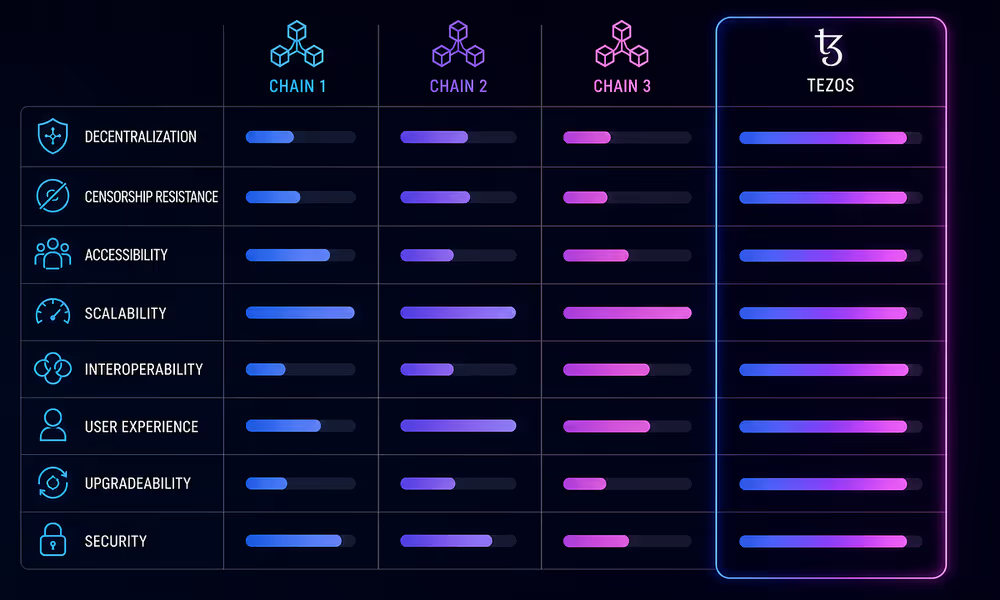
As I said earlier, it is very important to address today’s challenges to sustain broader adoption for the space. But how you do that is what matters most in my opinion.
Let’s take a look at scaling, for example. How much easier would it be to launch centralized L2s with admin keys, or increase the hardware requirements of validators to pump up the throughput of the network? Instead, in Tezos, core developers found innovative ways to address it, like combinations of the Data Availability Layer, enshrined rollups that are verifiable by the protocol itself, and a bunch of other technical milestones that addressed the problem without sacrificing decentralization.
Same with interoperability and user experience. Centralized bridges, multisigs, and other similar solutions are the easy way to address many of these challenges, and for many projects and users that is enough, but for Tezos that was never an option. Instead, developers had to find and build completely new architectures like Tezos X that would address those issues without the important trade-offs we see all around us in the space.
So yeah, Tezos never forgets the fundamentals, but it also never stops evolving. It never stops adapting and adopting new things, and it never stops trying to develop technologies and architectures that in many cases are innovative enough that we later see others adopting them as well.
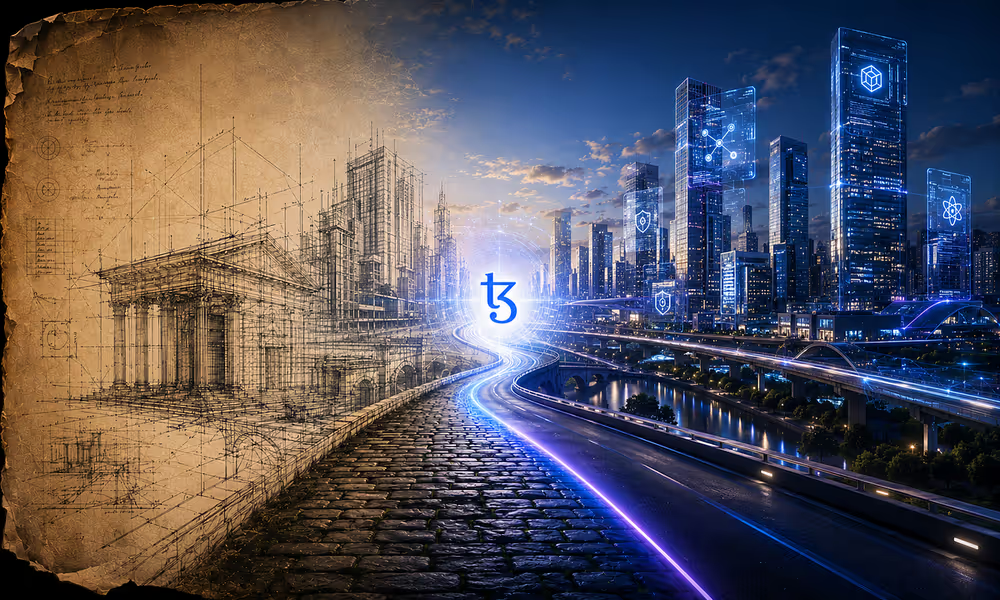
So can a blockchain be both old and new?
As contradictory as it sounds, in my opinion, yes, it can. Tezos does it. It is old enough to have a significant history of development, experience, and the important blockchain ideals at its core, but at the same time it keeps innovating and building cutting-edge technology that addresses the problems of today, and sometimes, even the problems of tomorrow (hello quantum), as good as, or better than, many other new chains out there.
Maybe that’s what being an old blockchain should actually mean. Not one that has stopped evolving, but one that knows which principles should never change, while continuing to evolve.