Happy Birthday, Tezos
Celebrating eight years with eight memorable moments in Tezos' history.
10 minute read
Eight years. What a journey it’s been. Since June 30, 2018, Tezos has gone from an ambitious idea to a blockchain with 21 protocol upgrades, one of the most recognized digital art ecosystems in Web3, and a roadmap that continues to push the industry forward.
Looking back, there are countless moments that helped shape this journey. Some were technical breakthroughs. Others were community-driven. Some challenged long-held assumptions, while others opened entirely new chapters for the ecosystem.
To celebrate Tezos’ eighth birthday, I wanted to look back at eight moments that, in my opinion, best capture what has made Tezos such a unique blockchain over the years. There are plenty of other milestones that deserve to be mentioned, but these are the eight that made my list.
Happy Birthday, Tezos. Now, let’s take a trip down memory lane.
1. The Launch: Proving Proof of Stake Could Work #
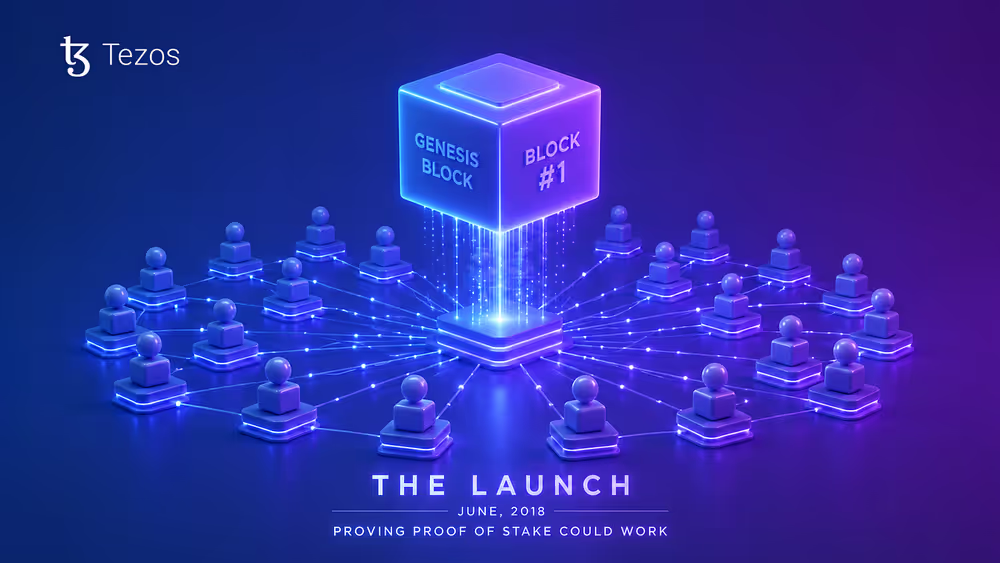
When Tezos launched in 2018, it did so with Proof of Stake at its core, at a time when most major blockchains still relied on Proof of Work.
While the concept had existed for years, Tezos became the first major blockchain to show that Proof of Stake could successfully secure a public network at scale. It also introduced delegation, allowing users to participate in securing the network and earn staking rewards without giving up custody of their tez.
Eight years later, it’s hard not to appreciate just how ahead of its time Tezos was. Many of today’s leading blockchains now launch with Proof of Stake, while others have abandoned Proof of Work in favor of it. What was once considered an ambitious design choice has since become the direction much of the industry has taken, and Tezos led the way.
2. Athens: The First Self-Amendment #
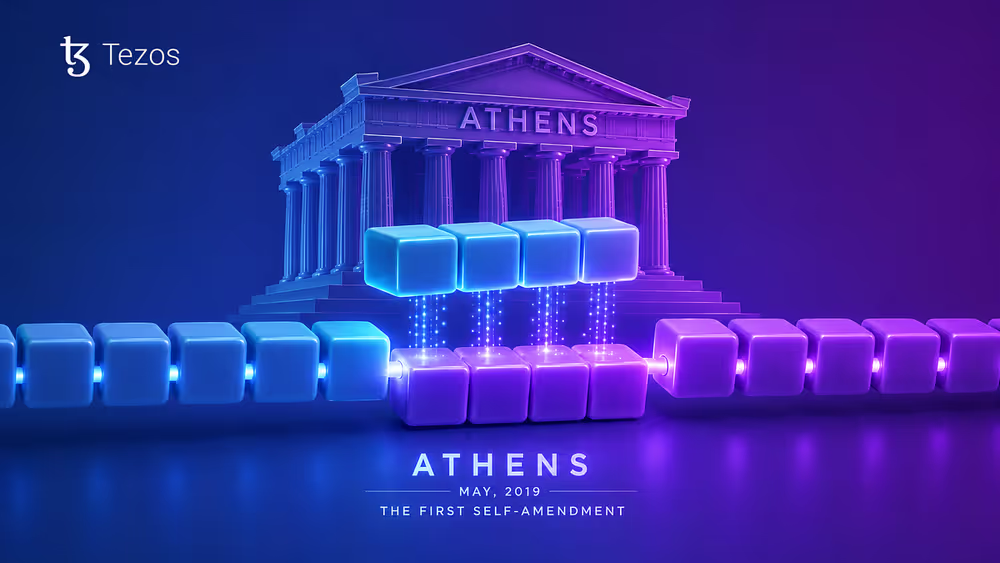
Probably my favorite upgrade because it reminds me of home.
For years, hard forks had been the blockchain industry’s way of introducing major protocol changes. While they often brought improvements, they could also split communities, create competing chains, and leave users choosing sides.
Tezos set out to change that.
In May 2019, the activation of Athens turned one of Tezos’ boldest ideas into reality. Instead of hard forking, the network successfully upgraded itself through its on-chain governance process, marking the first successful self-amendment of a blockchain.
Seven years later, Athens remains, in my opinion, one of the defining moments in Tezos’ history. It demonstrated that a blockchain can evolve without fragmenting its community or splitting into competing networks.
3. Tenderbake: Changing the Heart of Tezos #
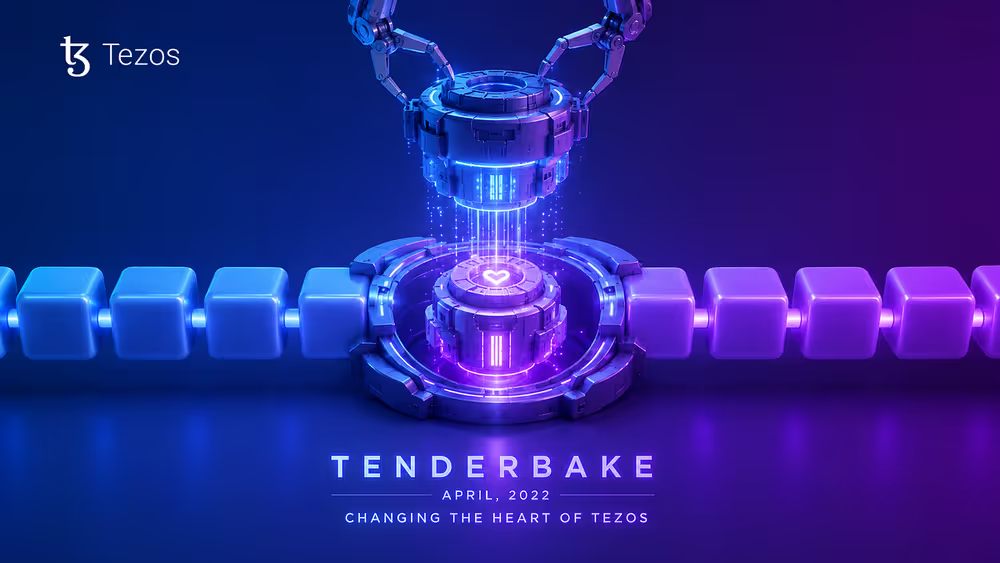
Athens showed that Tezos could evolve without hard forks. Tenderbake took that idea to a whole new level.
When the Ithaca 2 upgrade activated on April 1, 2022, Tezos introduced Tenderbake and did something that very few blockchains have ever attempted. It replaced its consensus mechanism while the network was live. Considering that consensus is the very component responsible for keeping a blockchain running, that’s about as fundamental a change as you can make.
Tenderbake didn’t just change how the network reached consensus. It also introduced deterministic finality, improving transaction certainty for users and creating the foundation for many of the network improvements that followed, including the huge reductions in block times and finality that we have today.
More than anything, though, Tenderbake reinforced one simple idea. On Tezos, no part of the protocol is untouchable. If something can be improved, it can evolve through on-chain governance and self-amendment, even the governance process itself, as we had seen with Edo.
4. Kathmandu: Protocol-Funded Development #
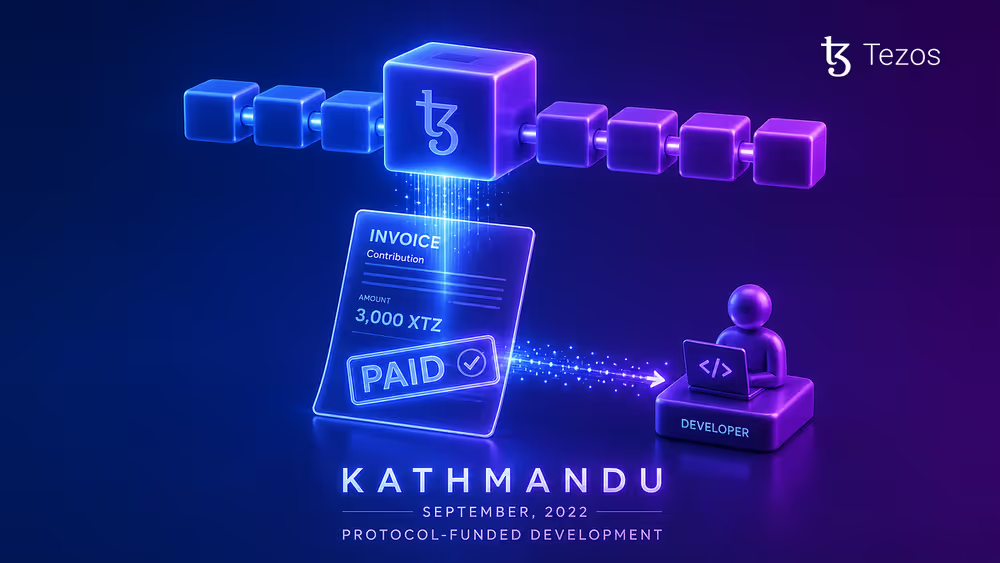
This next one is a little different. In fact, there’s a good chance many of you don’t even remember it.
With the Kathmandu upgrade, an independent community developer contributed a piece of code that became part of the protocol. Along with that contribution came an invoice. Once the proposal was approved and activated, the protocol itself automatically paid the agreed 3,000 tez to the contributor.
The amount itself wasn’t really the point. It was the fact that a protocol amendment didn’t just introduce new code, it also rewarded the person who wrote part of it. It’s a small detail in the grand scheme of things, but one that has always stuck with me. Mainly because, although protocol development has always been funded by Tezos Foundation, it was a reassuring reminder that another path already exists should it ever be needed.
5. The First Major Governance Test #
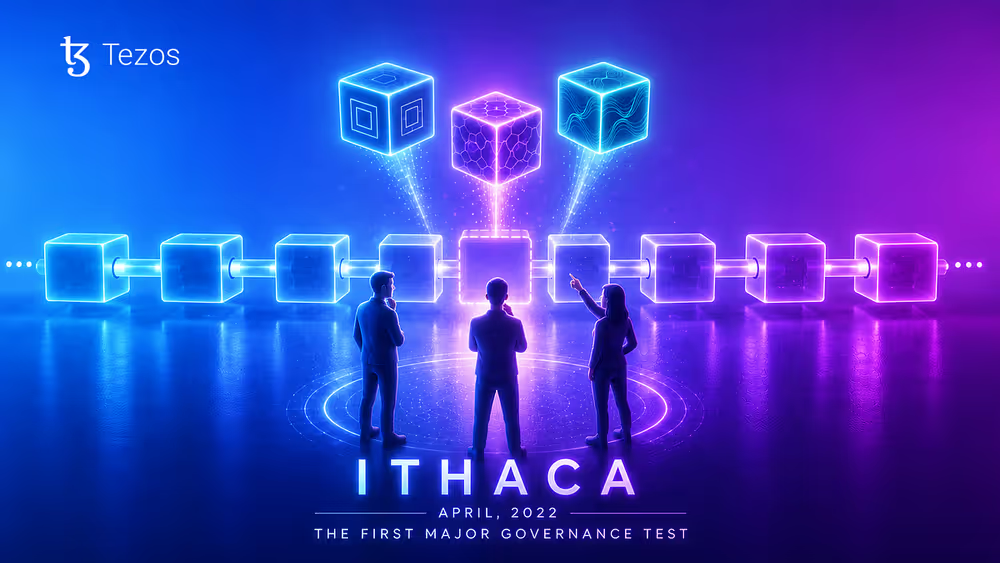
One of the original promises of Tezos was that disagreements over protocol upgrades wouldn’t have to end with hard forks and competing chains. In 2022, the Ithaca upgrade proposal became the first real test of that idea.
After concerns were raised during the Exploration period, the original Ithaca proposal was rejected. Rather than splitting the community, protocol developers went back, refined the proposal, and returned with Ithaca 2. This time, multiple competing versions entered the governance process, sparking one of the most active and contested voting periods in Tezos’ history, with passionate debates and different parts of the community backing different paths forward.
In the end, the governance process did exactly what it was designed to do. A proposal was selected, compromises were made, and development moved forward without creating competing chains or splitting the community. Years later, Oxford followed a similar path, with community feedback leading to refinements before the redesigned Adaptive Issuance was eventually introduced in ParisB. All these moments helped to improve the feedback loop between protocol developers and the rest of the community, turning disagreements into discussions that ultimately led to better protocol upgrades.
6. A New Era for Staking with ParisB #
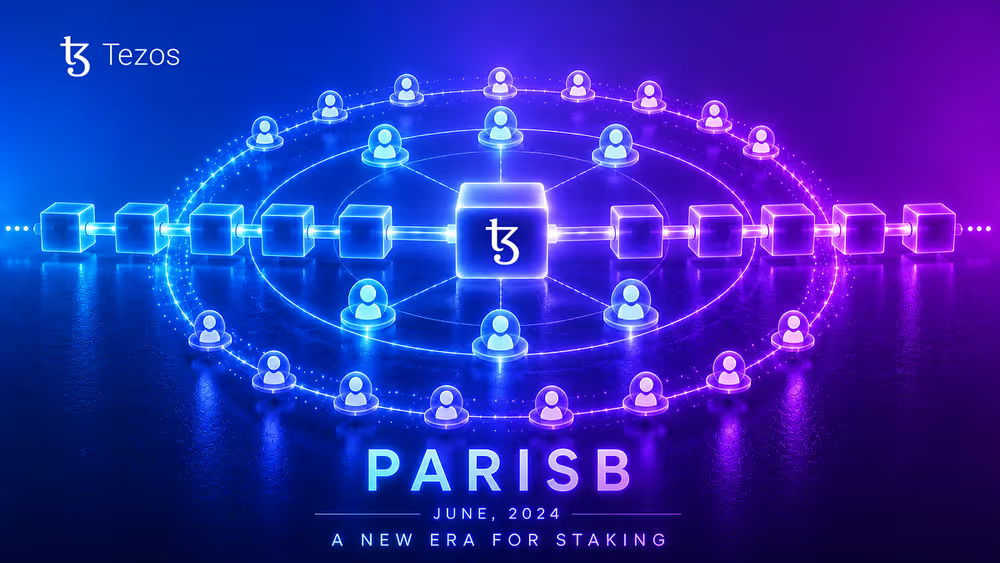
And speaking of ParisB, that brings us to the next moment on the list.
The ParisB upgrade introduced the biggest overhaul to Tezos’ staking model since the network launched. It introduced a new staking role alongside delegation, rebalanced how rewards are distributed between active stakers and delegators, and introduced Adaptive Issuance, allowing the protocol’s tokenomics to adjust dynamically based on network participation.
The goal was to encourage more users to actively stake their tez and strengthen the economic security of the network. The results have been hard to ignore. At the time the overhaul was introduced, around 7.5% of the total supply was actively staked. Today, that figure has grown to more than 29%, with participation continuing to increase.
Interestingly, while much of the industry has gradually adopted the staking model that Tezos helped pioneer, Tezos itself didn’t stand still. The staking overhaul pushed the model even further, introducing greater flexibility, accessibility, and stronger incentives for securing the network.
7. Real Adoption: The hic et nunc Moment #
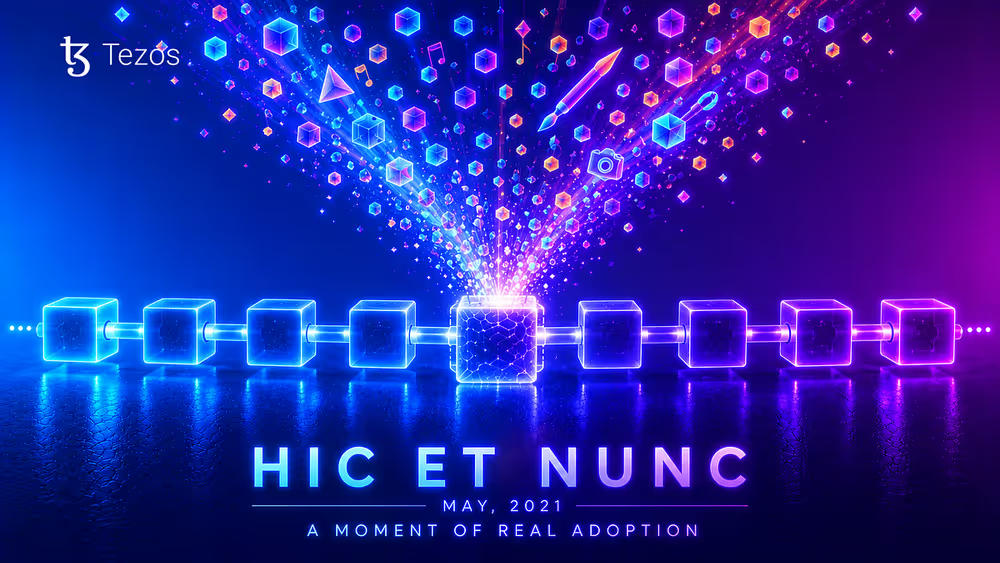
Of course, I couldn’t leave hic et nunc off this list. It’s impossible to talk about the history of Tezos without talking about art and the incredible community that formed around it.
At a time when high gas fees on Ethereum had become a major barrier for artists, hic et nunc offered something different. Thanks to Tezos’ low transaction costs, artists from around the world could finally afford to mint and collect on-chain. For many, it wasn’t just their first experience with Tezos, but their first meaningful experience with blockchain technology altogether.
The NFT boom eventually faded, but the Tezos art community didn’t. While hic et nunc eventually gave way to community-driven efforts like Teia, alongside platforms such as Objkt, the culture it helped spark continued to grow. Today, the Tezos art scene remains one of the strongest and most active in the industry, with artists, collectors, galleries, and exhibitions continuing to thrive years after the hype has moved on.
To me, that’s what makes hic et nunc one of the defining moments in Tezos’ history. It brought thousands of new people to Tezos through creativity, helping establish an artistic identity that has made the Tezos art scene second to none.
8. Tezos X: The Next Chapter #
And finally, I wanted to end this list by looking ahead.
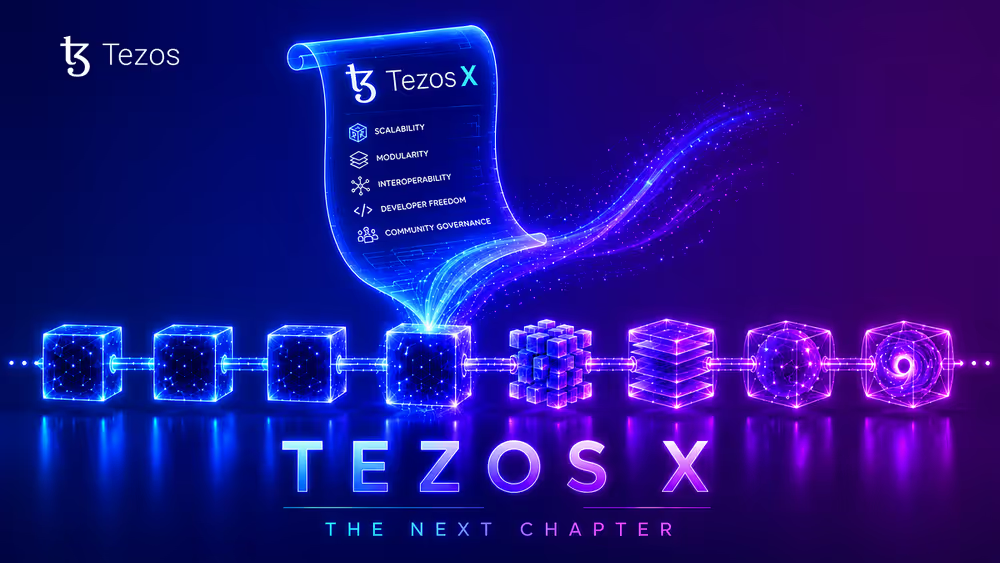
At TezDev 2024, the Tezos X proposed roadmap was unveiled, outlining one of the most ambitious visions in Tezos’ history. Instead of focusing on a single protocol upgrade, it presented a long-term direction for the network, built around Smart Rollups, the Data Availability Layer, and a modular architecture designed to deliver massive scalability without compromising decentralization or on-chain governance. The roadmap has since evolved, but this was the moment when that journey began.
Since then, that vision has gradually been taking shape. The Data Availability Layer was activated on mainnet, Etherlink launched and continued to mature, and Tezlink emerged on testnet in preparation for Tezos X, which is now just around the corner. Together, they will introduce a shared execution layer where different runtimes can interact with extraordinary composability. At the same time, projects like TzEL are exploring entirely new possibilities made possible by this evolving architecture.
The unveiling of the Tezos X proposed roadmap felt like the natural final moment for this list because it marked the beginning of a completely new chapter for the protocol that is still being written.
So there you have it. These are the eight moments I chose to celebrate Tezos’ eighth birthday. I’m sure everyone would come up with a different list, and that’s part of what makes this ecosystem so special. Tezos has so many sides, so many stories, and so many important milestones that you could probably write an entire book about them.
As for me, I genuinely believe the most exciting moments are still ahead of us. If the first eight years have taught us anything, it’s that Tezos has never been afraid to challenge itself, evolve, and try things that few other blockchains would even attempt. I can’t wait to see what this list looks like another eight years from now.
Now I’d love to hear from you. Which moments would make your list? Did I leave out one that you think absolutely deserves to be there? Let me know, I always enjoy seeing how other people experienced the Tezos journey.
Happy Birthday, Tezos. Here’s to many more years of innovation, creativity, and continuous evolution.