Championing Digital Art: Inside the HEK x Tezos Foundation Partnership
In 2026, HEK Basel and the Tezos Foundation launched a year-long partnership.
7 minute read
In 2026, HEK Basel and the Tezos Foundation launched a year-long partnership focused on the presentation, education, and long-term preservation of blockchain-based art. The collaboration builds on a relationship that began in 2022, when HEK publicly committed to exploring blockchain and Web3 technologies as tools for collecting, presenting, and supporting digital art.
Moving beyond the volatile market cycles often associated with NFTs, the program positions blockchain as part of a broader cultural infrastructure and explores how emerging technologies supports artists, expands access, and develops new curatorial formats.
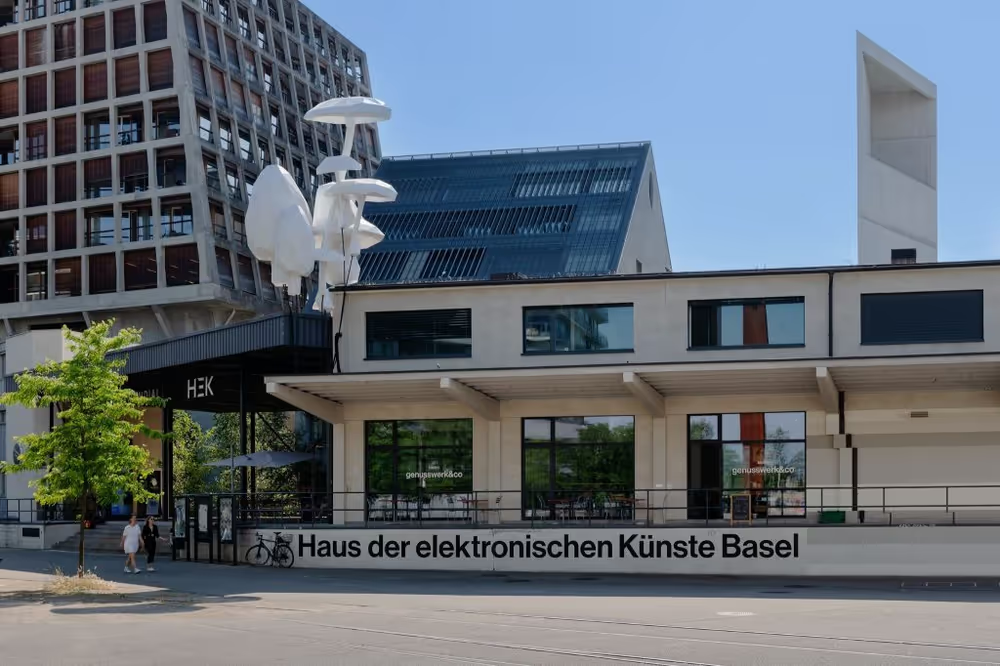
A program both online and offline #
The partnership bridges the virtual and physical realms through two exhibitions on virtual.hek and a complementary outdoor presentation during Art Basel. By inviting guest curators to develop exhibitions specifically for virtual.hek, HEK can introduce new perspectives and experiment with forms of media art that are not restricted by the constraints of a physical gallery.
“The collaboration with the Tezos Foundation opens up new curatorial and technological possibilities for HEK,” HEK Director Sabine Himmelsbach said when the partnership was announced. Aleksandra Artamonovskaja, Head of Art at Trilitech, an R&D hub within the Tezos ecosystem, described this approach to ARTnews as a kind of “museum without walls.”
This digital exhibitions are anchored back to HEK’s physical site through a dedicated kiosk, providing multiple points of entry for both on-site visitors and remote audiences
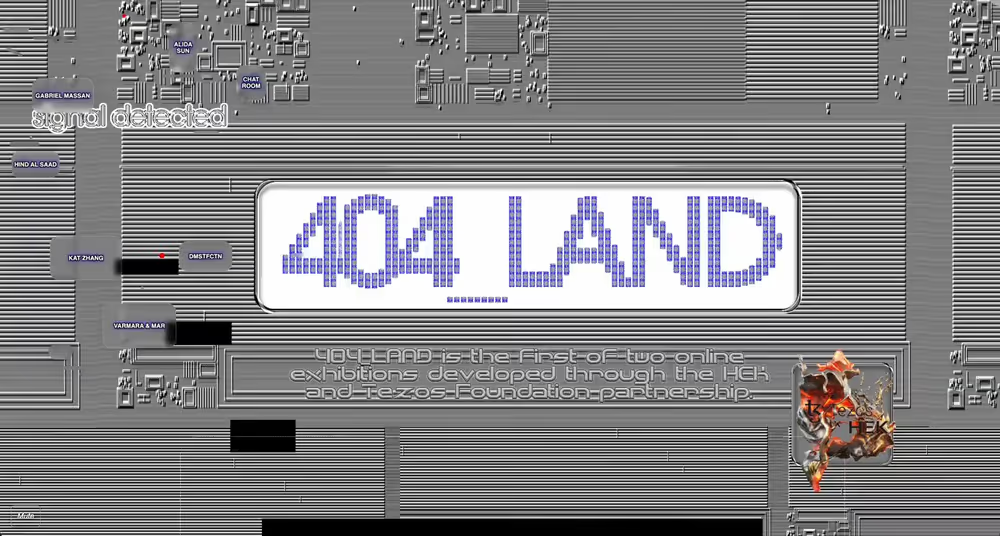 404_LAND, screenshot of the virtual exhibition on virtual.hek.
404_LAND: where the internet appears to end #
Curated by Auronda Scalera and Alfredo Cramerotti, the first virtual exhibition 404_LAND (June 12 – August 9, 2026) utilized the “404: not found” error as a philosophical framework. Framing it not as a signal of framework, but as an entry point into a speculative landscape of broken routes, failed coordinates, and disappeared files. The curators described the project as beginning “where the internet pretends to end.”
The design reflected this framework, rather than moving sequentially from one work to the next, visitors were able to freely explore and drift through the virtual landscape of the exhibition.
The theme also opened up a wider concern, considering the ways systems organize access, visibility, memory, and power. 404_LAND therefore asked what remains hidden within digital systems, what becomes lost, and what kinds of spaces might emerge when established structures reach their limits.
In their works, artists Gabriel Massan, Varvara & Mar, Hind AlSaad, Alida Sun, Kat the Port Engineer, and DMSTFCTN, did not simply illustrate the internet’s failures. They examined the political and imaginative possibilities that emerge within those failures. Broken links and unreachable addresses became openings through which other histories, identities, environments, and forms of agency could be considered.
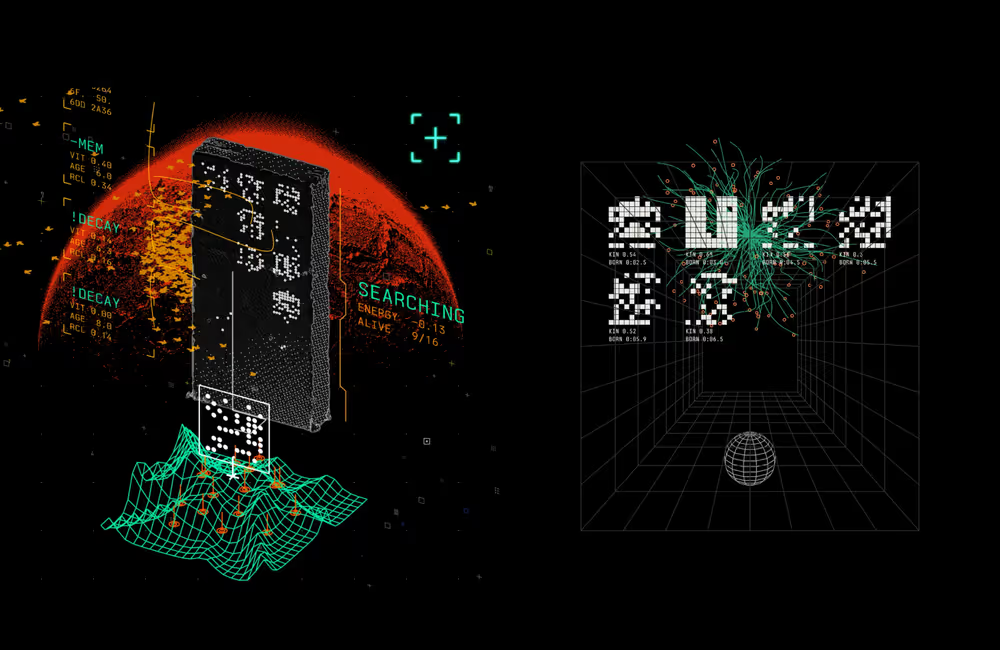 Kat Zhang, the Poet Engineer, Hypomnemata · Chinese V of V (still), 2026.
Connecting curatorial context with blockchain-based releases #
The 404_LAND exhibition was accompanied by a series of works released via objkt, a digital art marketplace built on the Tezos blockchain. The releases extended the exhibition into another environment, allowing works to circulate within a network of artists, collectors, and digital art communities.
Artamonovskaja noted in her conversation with ARTnews that roughly half of the collectors on Tezos-based platforms are themselves artists. Artists collect from one another, follow the development of each other’s practices and exchange knowledge. “That kind of patronage model is rare in other art markets,” Artamonovskaja observed, emphasizing that the shared dialogue extends beyond financial transactions.
Although the virtual exhibition is now closed, the releases can still be explored through the 404_LAND collection on objkt.
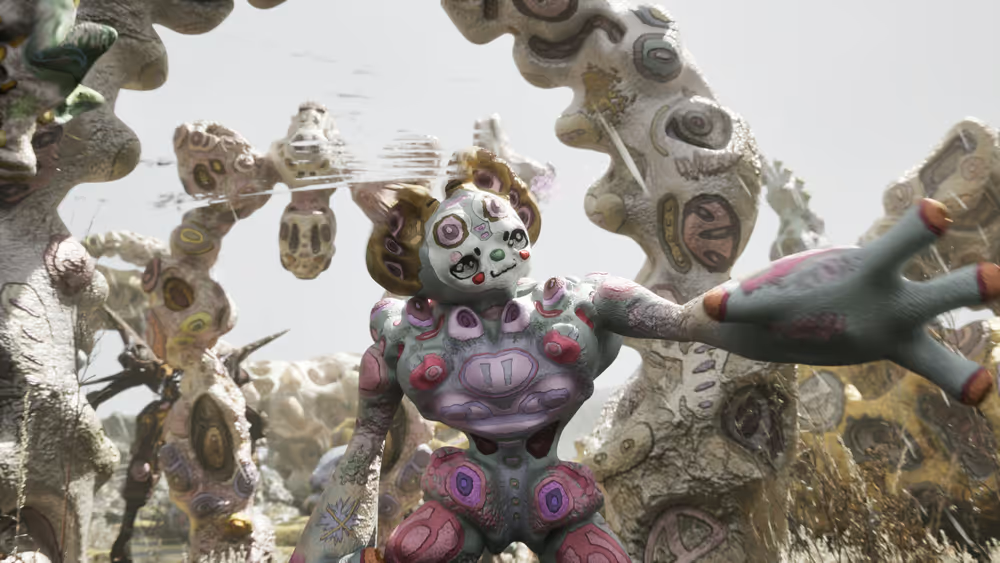
Gabriel Massan, Victims (still), from the ongoing Ball Of Terror series. Courtesy of the artist.
Education as infrastructure #
For visitors unfamiliar with blockchain, technical concepts like wallets and smart contracts can create barriers to understanding certain works. To address this, HEK and the Tezos Foundation integrated hands-on workshops and on-site learning into the program.
“Education is absolutely crucial,” Artamonovskaja told ARTnews. A certain degree of grounding, she argued, is needed to engage fully with artworks that use blockchain as an integral component.
While the museum kiosk helps bridge this divide by introducing blockchain-based art within the institutional setting, interactive workshops allow visitors to learn through direct engagement.
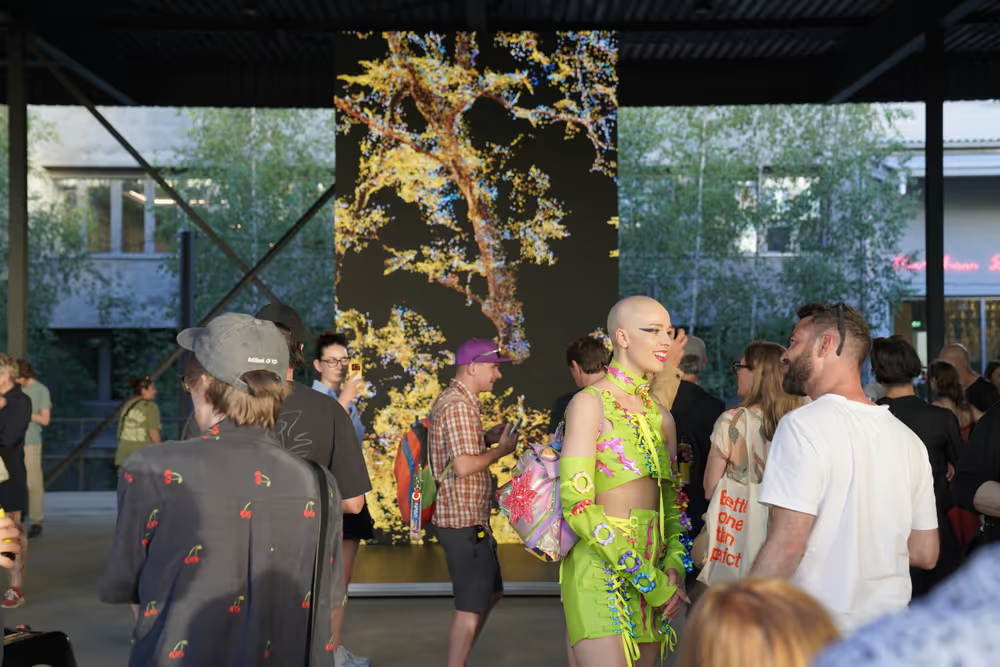
Quayola: En plein air | HEK x Tezos Foundation Reception. June 17, 2026. Courtesy of HEK.
Quayola: En plein air #
During Art Basel Week (June 15–21, 2026), HEK and the Tezos Foundation presented En plein air, an outdoor installation by Italian artist Quayola, on HEK’s exterior platform. Drawing from his ongoing Pointillisme series, the artwork engages with 19th-century Impressionist and Neo-Impressionist landscape traditions through computational systems, algorithmic logic, and robotics.
Central to the project is an autonomous quadruped robot equipped with a high-precision scanner that surveyed the Provençal countryside. As it navigates the vegetation, it struggles to accurately capture the complex geometries and shifting colors of the natural environment. Quayola foregrounds the resulting gaps, distortions, and chromatic aberrations, framing these technological limitations as a new form of machinic expressiveness. Custom software then processes the scanned data into point-cloud visualizations, digital prints, and moving-image installations.
The installation was accompanied by the release of Provence, an NFT collection of 15 images from the series available on the objkt marketplace as well as an evening reception celebrating
On June 17, HEK and the Tezos Foundation team hosted an evening reception, where over 300 guests came to celebrate Quayola’s installation and explore the 404_LAND exhibition on the museum’s kiosk.
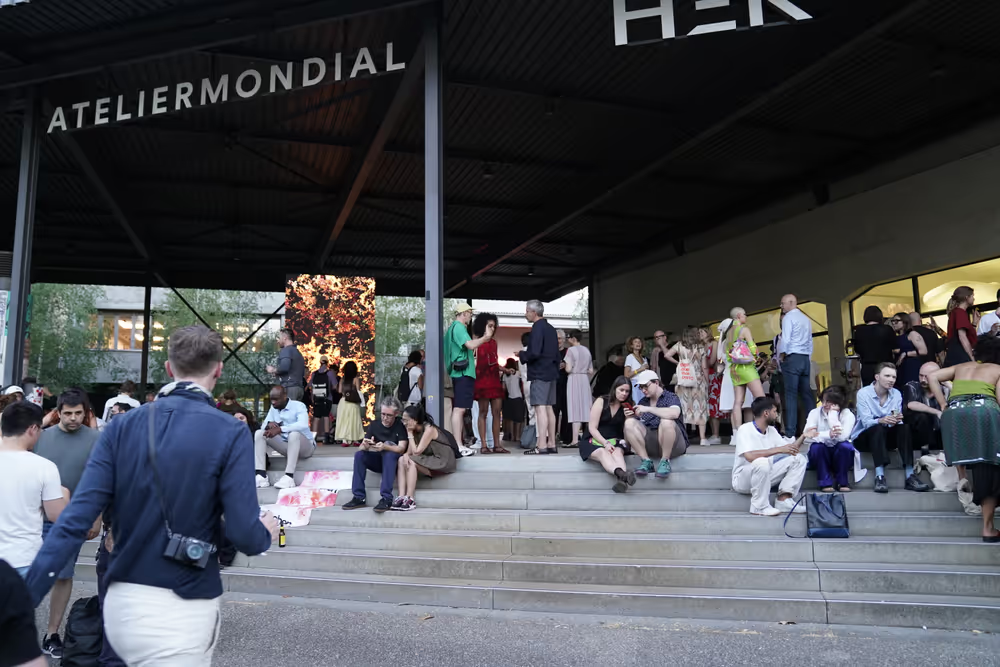
Quayola: En plein air | HEK x Tezos Foundation Reception. June 17, 2026. Courtesy of HEK.
The challenge of preserving digital art #
Beyond public programming, the partnership places a strong emphasis on the long-term preservation of software-based art. Digital works are often vulnerable to technological change, from browser updates, to programming languages changing or becoming obsolete, hardware failures and more. While blockchain preserves ownership records, it does not prevent media files or software dependencies from becoming obsolete over time.
To tackle this, the partnership contributed to an international training school on NFT preservation at ZKM | Center for Art and Media in Karlsruhe, organized through HEK’s leadership of the working group Software-based Art and Ownership within the EU COST Action European Media and Born-Digital Art Conservation and Knowledge Network (EMBARK). Bringing together European museum professionals to establish practical conservation standards, the initiative embodies what Artamonovskaja describes as “strengthening foundations for future generations of artists working with technology.”
From market attention to institutional practice #
The partnership reflects a broader shift in digital art from market speculation toward institutional consolidation. As the initial NFT boom has receded, institutions, artists, and curators are concentrating on foundational cultural questions, which Artamonovskaja described to ARTnews as a period of consolidation, characterized by a more thoughtful and structured approach to digital art.
By combining artistic experimentation and curation with education and conservation, HEK and the Tezos Foundation are moving beyond short-term market attention to build a lasting framework for digital culture by supporting digital artists, educating audiences, and preserving contemporary digital art for future generations.