TezDev 2026: A Personal Recap
What I'm Taking Away from This Year
8 minute read
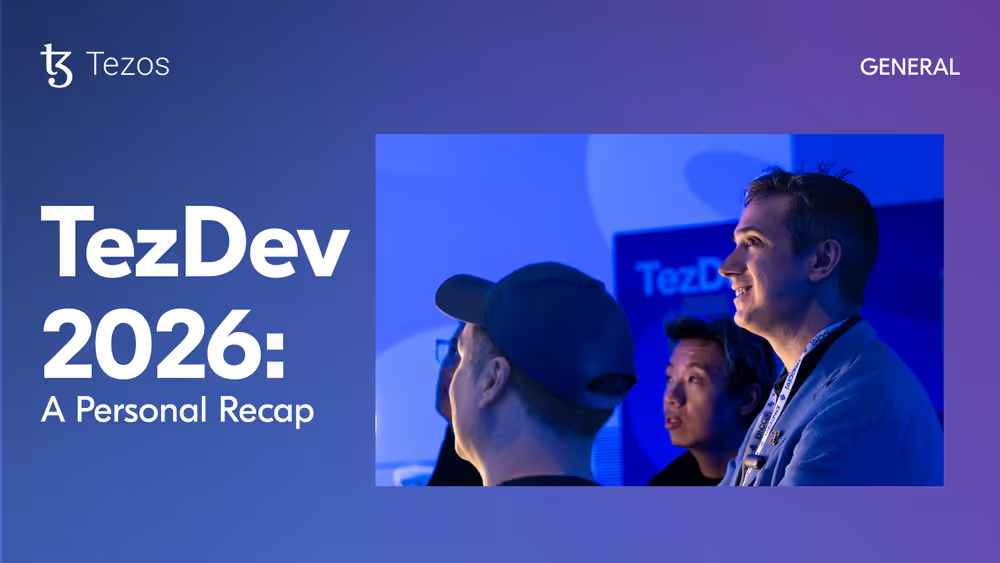
Coming into TezDev this year, I didn’t really know what to expect.
Not because there wasn’t anything happening, quite the opposite. There’s been a lot of building over the past couple of years. But with the current state of the market, the question was more about how it would all come together. Would it feel like momentum, or just another round of updates?
From the moment the doors opened, you could tell something was different. The room filled up quickly, people were already there early, conversations already in full flow, and the presentations and panels hadn’t even started yet. Compared to last year, when things took a bit to ramp up, this felt more immediate. More present.
And that carried through the entire day.
The overall vibe wasn’t loud or overly hyped. It was focused. Grounded. The kind of atmosphere you get when people aren’t trying to sell a vision anymore, they’re working toward delivering it.
Talks, Panels, and Key Takeaways #
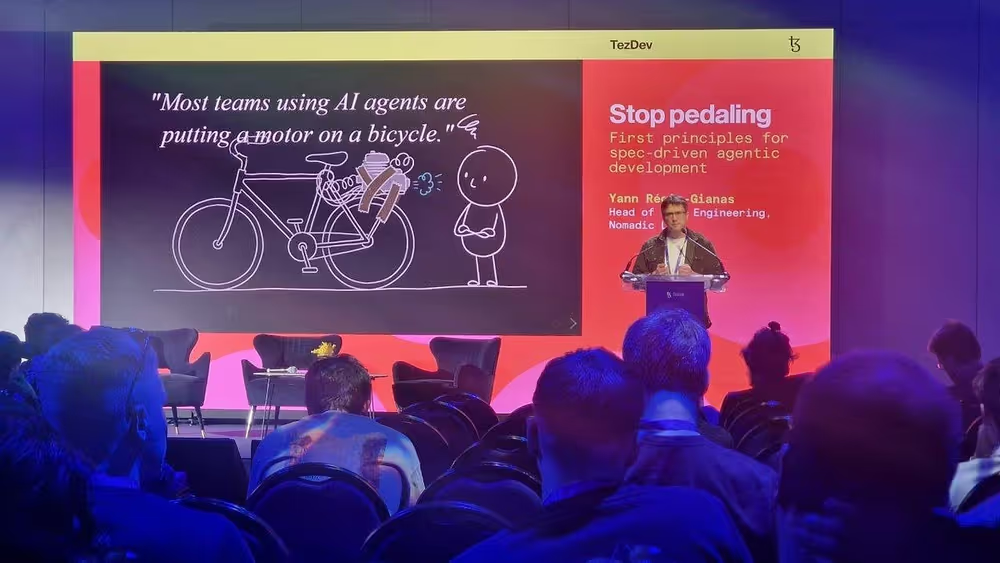
Let’s start with the talks and panels, which this year touched on a wide range of topics, to the point where I could probably write a separate article for each of them.
A few things that stood out to me were the progress around atomic composability, and how this connects to the broader Tezos X vision, the introduction of a protocol-level LST that changes how staking and liquidity can work, and the DeFi panels focusing on instant confirmations, intents, and the direction bridging is heading. On top of that, Yann’s talk around agentic development added another angle to all this, especially given how dominant the whole agent narrative is right now. The link to formal verification, something Tezos was built around, made it feel very relevant.
I’m not going to try to break everything down here, but I did feel like I got a better understanding of where things are heading, with a lot of interesting ideas and directions being explored. Definitely worth going through the talks if you want to dig deeper.
Arthur’s Keynote: Where Things Stand Now #
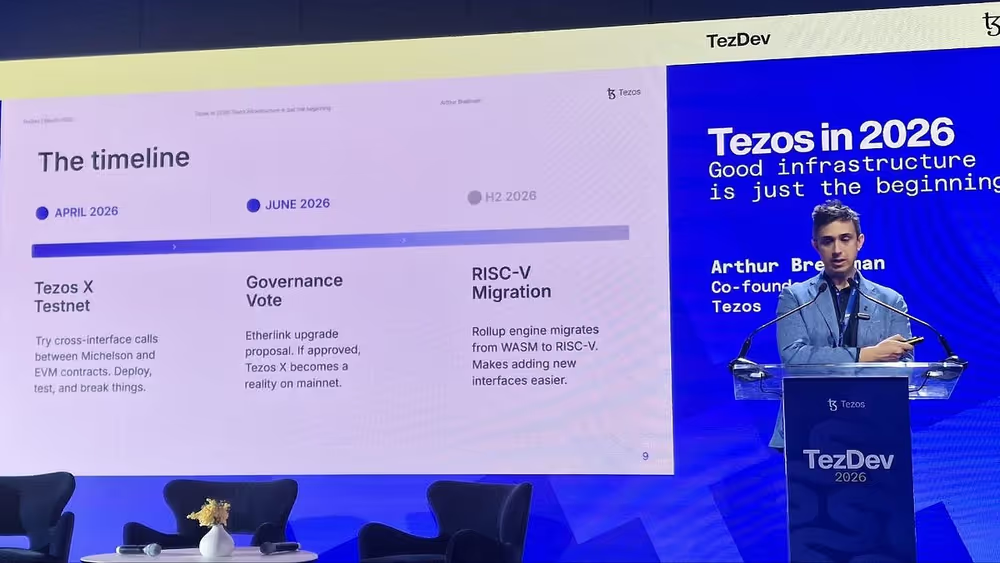
Following all the talks and panels, Arthur’s keynote came in to tie everything together.
He started by saying that if you’ve been following the ecosystem closely, nothing you’ll hear today should really surprise you. And in a way, that was true. But still, hearing that Tezos X could be live on mainnet as early as this summer actually caught me kinda off guard. I was expecting a longer timeline, so that alone made everything feel a lot closer than anticipated.
The rest of the talk wasn’t about big announcements. It was more about showing where we stand right now and how the pieces are coming together. Etherlink evolving into Tezos X, multiple runtimes sharing the same execution layer, and everything tying back to what we saw earlier around composability. Latency came up again as a clear focus, with instant confirmations around ~50ms, reinforcing what we heard in the DeFi panels as well.
But the bigger shift was in direction. A lot of the heavy infrastructure work is now in place, and the focus is starting to move more toward products that people actually use. Revenue being mentioned as the key signal made that pretty clear. Not in a “numbers go up” way, but more as proof that something actually works. It separates ideas that sound good from things people come back to and are willing to pay for, so that’s likely where more focus will go moving forward.
This doesn’t mean that support is gone, more like it shifts. Less about funding ideas in the hope they work, and more about helping things that already show signs of life to actually scale.
Overall, it felt like a transition point. As the infrastructure is at a point where it’s no longer the bottleneck, the focus now is on building things people actually use. As always with Arthur’s keynotes, there’s a lot more covered than what I caught and mentioned here, including a video presentation of the Tezos brand evolution, so it’s definitely worth giving it a full watch.
metals.io — Taking It Beyond Uranium #
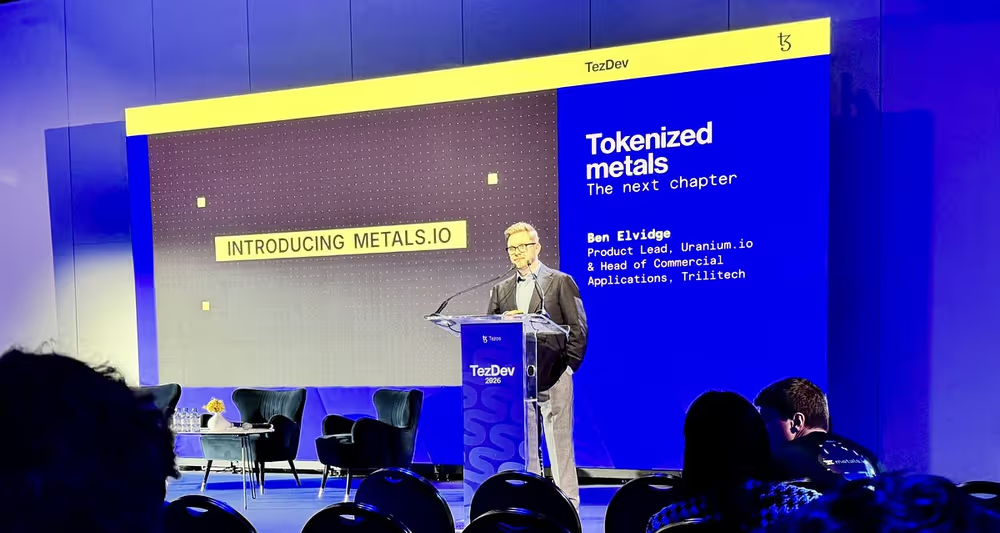
Not long after that, we shifted into something a bit different.
Ben Elvidge took the stage and started walking us through uranium.io and what they’ve built over the past year. And this is important, because this isn’t just another idea. They took uranium, something that’s basically inaccessible unless you’re an institution, and made it available in a way that didn’t really exist before.
Not through proxies or derivatives, but actual exposure to the physical asset. And if you think about it, you can’t really do that today. Not on Robinhood, not on Revolut, nowhere. And then he moved to the main point. They’re expanding this.
Introducing metals.io.
Same model, now applied to more metals. Gold, and a basket of critical materials like hafnium, rhenium, and indium, with more to come. The kind of stuff that sits behind entire industries, with real demand and real usage, but until now mostly out of reach.
That’s what made this stand out. It’s not just about putting assets onchain, it’s about opening up markets that weren’t available in the first place, and now it’s not just uranium anymore.
Art on Tezos — More Than Just a Side Note #
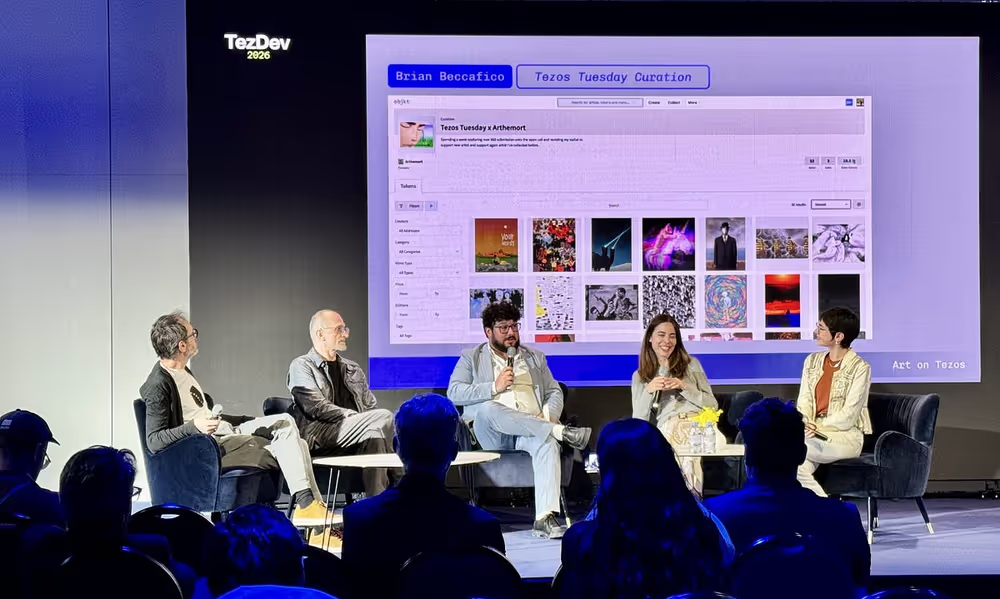
I mentioned last year that TezDev has been evolving into something beyond just a developer-focused event, and that was still as clear this time around. It’s not just about the tech anymore, it’s about the whole ecosystem, and that naturally includes art.
The final panel of the day focused exactly on that. Rather than trying to define where things are going, it felt more like a reflection of what’s already happening. A big part of the conversation was around accessibility, how Tezos has opened the door for artists from all over the world to participate, not just those based in the usual art hubs. At the same time, there was a lot of emphasis on the direct connection between artists and collectors, something that feels very native in this space.
There was also this broader idea that digital art is becoming more fluid. Not tied to a single format, not confined to galleries, and increasingly blending with physical experiences as well. It’s less about replacing traditional art and more about expanding what art can be.
And then the talks wrapped, and things moved into something more immersive.
Like last year, a full 360° art experience took over the next room, with works surrounding you from every direction. IRREVERSIBLE, curated by Strano for Art on Tezos, brought everything together into this shared space.
It wasn’t just something you look at, it was something you stepped into. The lights, the sound, and the visuals all working together and create a completely different kind of atmosphere. People were walking around, reacting to it, pointing things out to each other, trying to take it all in.
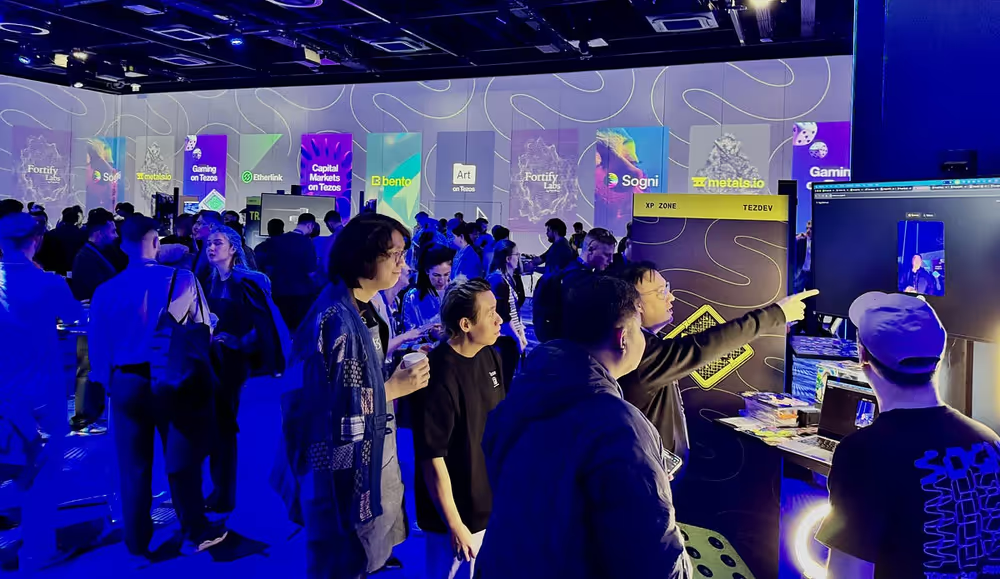
It’s worth mentioning that outside of the talks themselves, there was a lot happening in parallel throughout the whole day.
The next room was constantly full, people moving between booths, conversations happening non-stop, teams showing what they’re building. It never really felt empty at any point, which honestly surprised me a bit given the current state of the market.
TezQuest added another layer to all this. You could see people going around from booth to booth, trying things out, solving small challenges, and collecting points. It wasn’t just passive, people were actually engaging with the projects. And with a prize pool that included things like an iPad, a DJI Osmo, a Nintendo Switch, and more, there was definitely some extra motivation to “hunt” those points.
But beyond the activities, what felt really great was the overall feel of the event. This happened during a pretty rough period for the market overall. We’ve seen events across the space feel quieter this year, even big ones. So going into this, I wasn’t sure what to expect. But TezDev didn’t feel quiet.
It felt focused. Solid. Like things are moving. There were strong moments, meaningful discussions, and a sense that what’s being built is starting to connect.
And that, more than anything, is what I’m taking away from this year. Looking forward to the next one!