Announcing Tezlink Shadownet
The Michelson runtime for Tezos X is now on testnet.
5 minute read
Tezlink Shadownet, the first public test network for Tezlink, is now live.
This testnet is aimed at builders and developers who want to experiment with Tezlink and help validate its core objective: bringing Tezos Layer 1 compatibility into the broader Tezos scaling architecture, as outlined in the Tezos X roadmap. It provides a public environment to test existing tools, contracts, and workflows beyond Layer 1, and to share early feedback as this part of the stack continues to evolve.
If you’re looking for a broader, non-technical overview of Tezlink and how it fits into the longer-term proposed roadmap, you can also check out the article “Tezlink and the Future of Tezos X”, which focuses on that bigger picture. This post focuses instead on what’s available today on Tezlink Shadownet, what’s being tested, and how builders can get involved. To set that context, here’s a short overview of Tezlink.
Tezlink in One Minute (for Builders) #
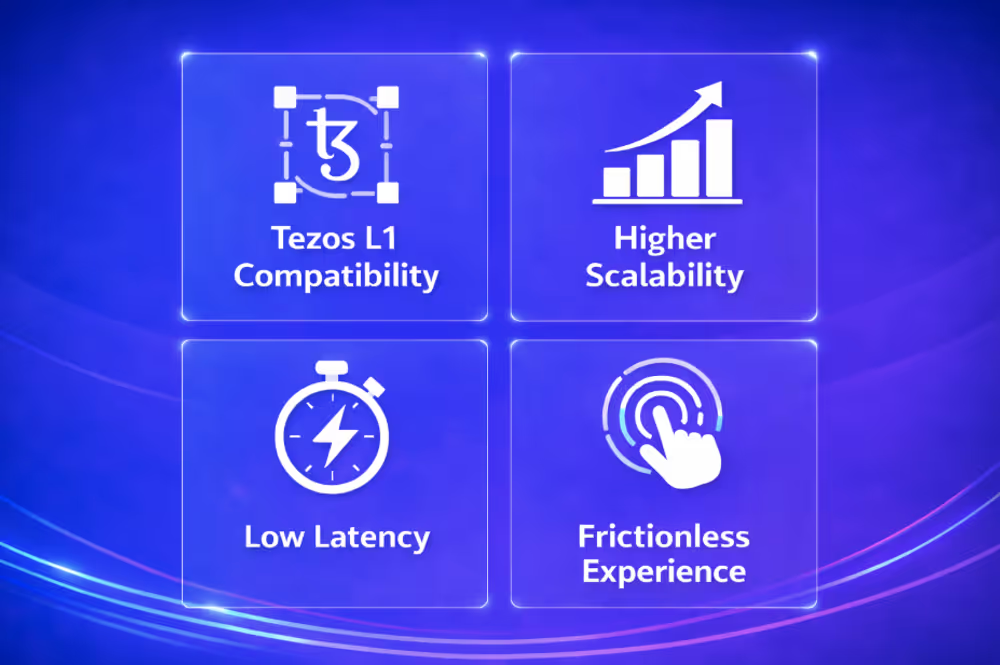
Tezlink is a Michelson-compatible runtime that will bring Michelson smart contracts into a higher scalability environment designed to support sub-second latency, lower transaction fees, instant confirmations, and atomic composability across runtimes, while preserving the development model builders already know from Tezos Layer 1.
Smart contracts written in Michelson, SmartPy, or Ligo will be able to run in this environment without requiring a rewrite of existing code or tooling. Contract logic, interfaces, and workflows will generally behave the same way as on Layer 1, with some differences, since certain Layer 1 features do not apply in a rollup context.
Tezlink will run alongside other runtimes on Tezos, such as Etherlink (EVM runtime), allowing applications built with different programming languages, and their ecosystems, to coexist and seamlessly interact within the same system.
This approach is what will allow Tezos to scale without fragmenting its ecosystem. Tezlink will provide a way for existing Michelson-based applications, tooling, and developer knowledge to carry forward as new execution environments are introduced, instead of forcing builders or users to start from scratch.
What Tezlink Shadownet Enables Today #
On Tezlink Shadownet, builders can deploy and interact with Michelson-based applications in a public testing environment, using most of the Michelson runtime features commonly used on Tezos Layer 1, such as implicit accounts (reveals/transfers), smart contracts (originations/calls), views and big maps, and internal operations.
For many existing Tezos Layer 1 contracts and applications, this means they can be deployed on Tezlink Shadownet with minimal or no changes, making it a practical environment for testing real workloads.
Some Layer 1 operations, such as delegation, votes, attestations, and other consensus-related mechanisms, are not relevant in a rollup context and are therefore intentionally not part of Tezlink.
From an operational standpoint, Tezlink Shadownet runs with a single sequencer, currently operated by Nomadic Labs. This provides a consistent and predictable setup during this early phase, while allowing the runtime and tooling to evolve quickly based on feedback.
The Tezlink Shadownet runs in a different execution environment than Tezos Layer 1, and as a result the current gas and fee model is experimental and may differ from Layer 1. This model is expected to evolve over time as the network matures within the Tezos X roadmap.
What’s Next #
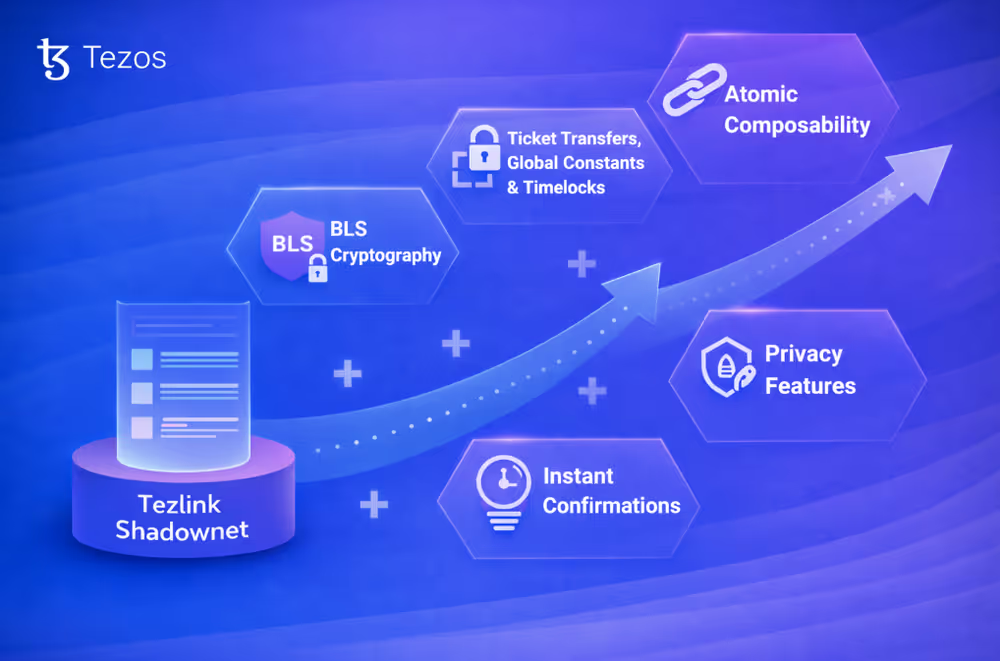
Tezlink Shadownet is an early step. While it can already be used for the compatibility and testing scenarios described above, some features are not yet implemented at this stage and may be introduced in later iterations of the test network.
These include support for BLS cryptography (tz4 addresses), ticket transfer operations, Sapling, timelocks, global constants, events and more. It’s also important to note that instant confirmations and atomic composability across runtimes are not enabled yet on Tezlink Shadownet (see Etherlink’s Instant Confirmations write-up for context).
Atomic composability will be introduced with the next major milestone: a test network where Tezlink and Etherlink run side by side on the same rollup, sharing a single sequencer. This configuration is required to enable cross-runtime interactions, allowing smart contracts deployed on Tezlink to interact directly with contracts running on other runtimes, and vice versa.
More details about this next phase are expected to be shared in Q1, as work continues toward a more integrated, multi-runtime execution environment for Tezos.
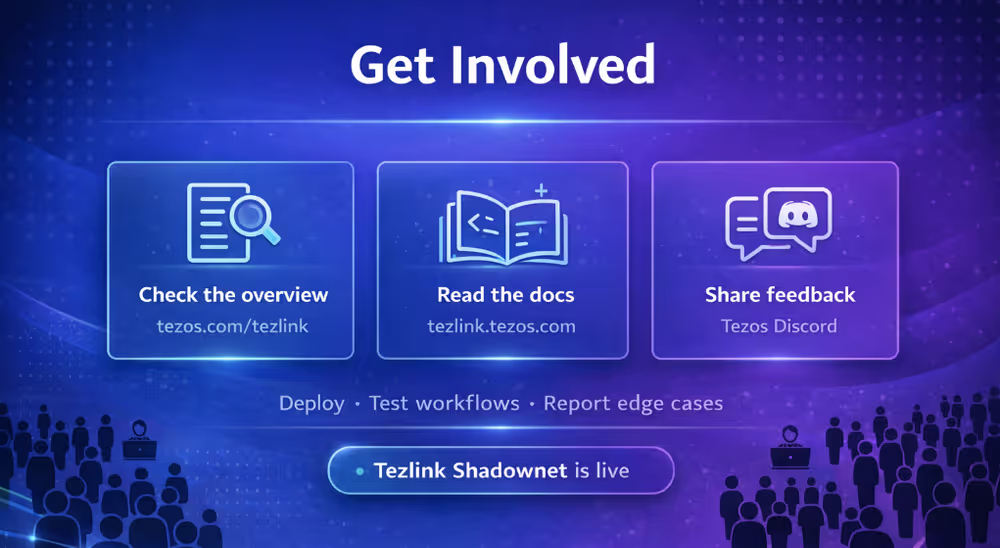
Tezlink Shadownet is now open for builders who want to get hands-on and help with what comes next. If you’re already building with Michelson-compatible tools, you can deploy your contracts, test real workflows, and see how your applications behave in this new execution environment.
Everything you need to get started is here: Technical documentation.
Early feedback matters a lot at this stage. Questions, experiments, edge cases, and even things that don’t behave as expected are all part of moving Tezlink forward, and the Tezos developer channels on Discord are the best place to share them.
Tezlink is about giving Tezos a clear path forward while leveraging what already works. It’s about letting the ecosystem scale, interconnect, and evolve while keeping Tezos development firmly at the center. For builders, that means continuity and new possibilities. For users, it means faster interactions, richer applications, and a smoother experience.
That’s the bigger picture for Tezlink, and Tezlink Shadownet is the first step in getting there.