Tezos in Q4 2025: Key Takeaways from the Latest Messari Report
Activity, infrastructure upgrades, and ecosystem developments across the network.
5 minute read
The Tezos ecosystem rarely moves in sudden bursts. More often, progress appears through a steady stream of upgrades, new applications, and communities continuing to build.
Messari’s State of Tezos Q4 2025 report offers a snapshot of where the ecosystem stood at the end of the year, looking at network activity, infrastructure improvements, and developments across the broader ecosystem.
Any single quarter only captures part of the picture, but reports like these help us step back and look at what the data actually says. And in the case of Q4, several trends become quite clear.
Let’s take a closer look.
Application Activity Continues to Grow #
One of the clearest signals in the Q4 report is the continued growth in application activity across the ecosystem.
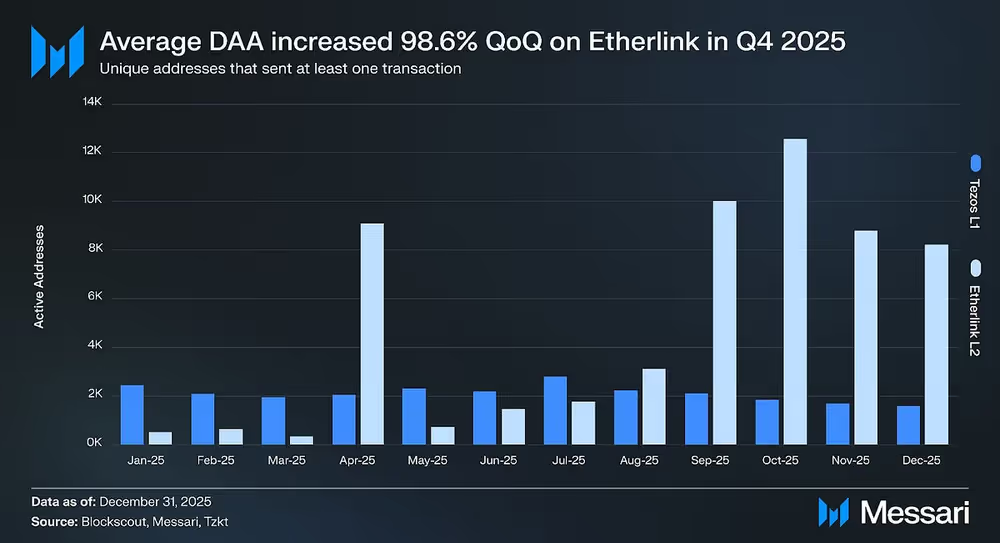
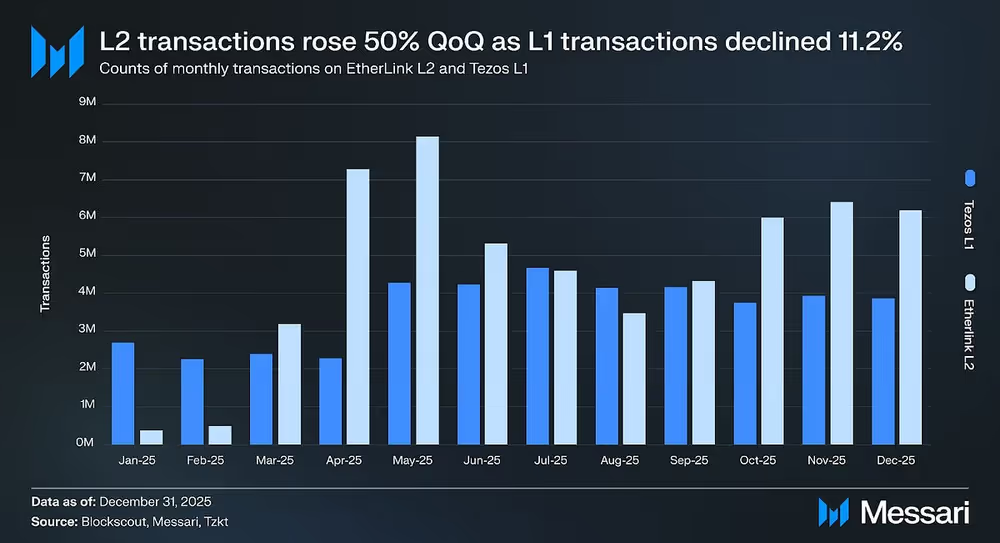
According to Messari, Etherlink transactions increased roughly 50% quarter-over-quarter, reaching about 18.6 million transactions, while daily active addresses nearly doubled to around 9,800.
In simple terms, that means more people were interacting with applications across the ecosystem compared to Q3**.**
This trend also didn’t suddenly appear in Q4. As we saw in my article covering the Q3 report, activity across the ecosystem had already started picking up, with increases in contract calls and overall network usage.
The Q4 data continues that pattern and shows that the momentum carried through the end of the year.
Taken together, these numbers show that application activity across the ecosystem continued increasing compared to the previous quarter.
 Source: Messari’s “State of Tezos Q4 2025” report
Infrastructure Expanded Alongside Usage #
While application activity was increasing, the infrastructure supporting that activity was also evolving.
Two upgrades rolled out for Etherlink during the quarter , Ebisu in October and Farfadet in December, both aimed at increasing the amount of activity the system can handle.
Without diving too deep into the technical details, the result is fairly straightforward, Etherlink can now process significantly more transactions and application activity than it could earlier in the year.
Infrastructure upgrades rarely grab attention, but they are what allow the ecosystem to keep scaling. As more applications launch and more users interact with them, having that additional capacity becomes increasingly important.
 Source: Messari’s “State of Tezos Q4 2025” report
Builders Continue Experimenting With DeFi #
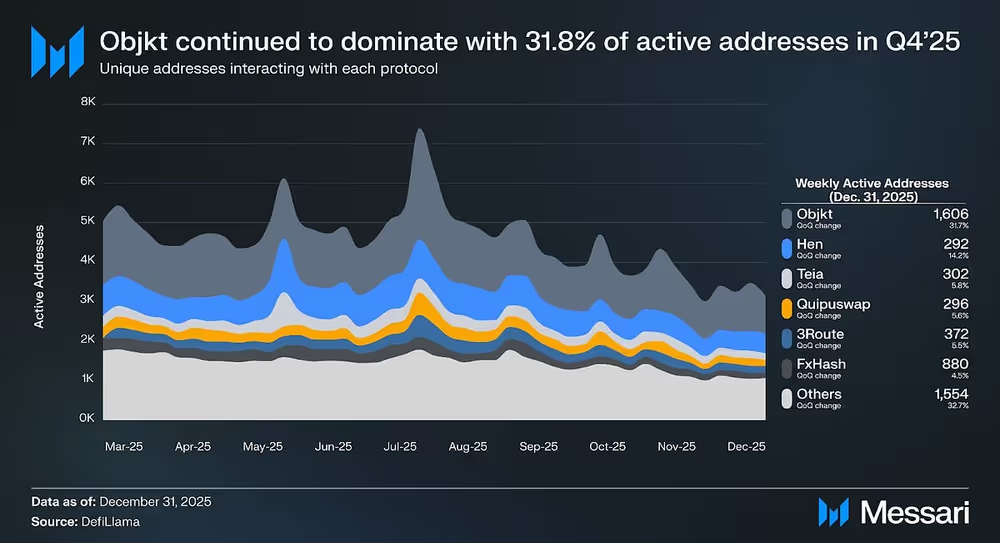
Beyond infrastructure and usage metrics, the report also highlights a growing mix of financial applications appearing across the ecosystem.
Protocols such as Superlend, Spiko, Uranium.io, and UltraYield gained traction during the quarter, each exploring different approaches to decentralized finance.
Some focus on lending markets, others on tokenized financial products, and others on new ways to generate yield.
What stands out here is not just the value locked in these protocols, but the variety of ideas being explored.
As we saw in the Q3 report, DeFi activity in the ecosystem had actually reached one of its higher points during the year, with TVL climbing significantly at the time. Q4 tells a slightly different story. Like much of the broader crypto market during that period, TVL pulled back somewhat toward the end of the year as asset prices cooled.
That kind of movement is fairly typical in DeFi. What matters more is that new protocols and integrations continued appearing throughout the quarter, gradually expanding the range of financial tools available within the ecosystem.
Digital Art Remains a Core Part of the Ecosystem #
 Source: Messari’s “State of Tezos Q4 2025” report
Another highlight from the quarter comes from a community that has been closely connected to Tezos for years: digital art.
The Art on Tezos: Berlin festival brought together artists, collectors, and platforms in November, once again putting the spotlight on the broader digital art community that has grown around Tezos.
One of the standout moments from the event came when the Francisco Carolinum Museum in Linz acquired 15 TeleNFT artworks, marking a notable moment where blockchain-based art intersected with traditional cultural institutions.
There were also strong signals on the collector side. Generative artist qubibi sold the piece “hello world” for 62,000 XTZ, one of the more notable generative art sales of the year.
Moments like these highlight something that has been true for quite some time: Tezos continues to hold a unique place within the digital art ecosystem.
Looking at the Bigger Picture #
When looking at the raw metrics in the report, the picture might initially seem less encouraging, with several indicators declining compared to earlier in the year. But it’s also important to remember the broader context. Market conditions toward the end of 2025 weren’t great across the crypto space, and metrics like TVL or transaction activity often move alongside those cycles.
When the data is viewed in context, however, the report still highlights several important signals: continued infrastructure development, new integrations across the ecosystem, and growing activity around Etherlink.
Taken together, these reports don’t point to a single defining moment. Instead, they show something more gradual, an ecosystem continuing to expand its infrastructure, its applications, and the communities building within it.
And with the Tezos X roadmap continuing to move forward, the coming months will likely reveal how these pieces begin fitting together more clearly as the network evolves through 2026.