Two Years of Adaptive Issuance: Where Tezos Staking Stands Today
From participation and issuance to staking rewards, here's what the network looks like two years after one of Tezos' biggest economic upgrades.
6 minute read
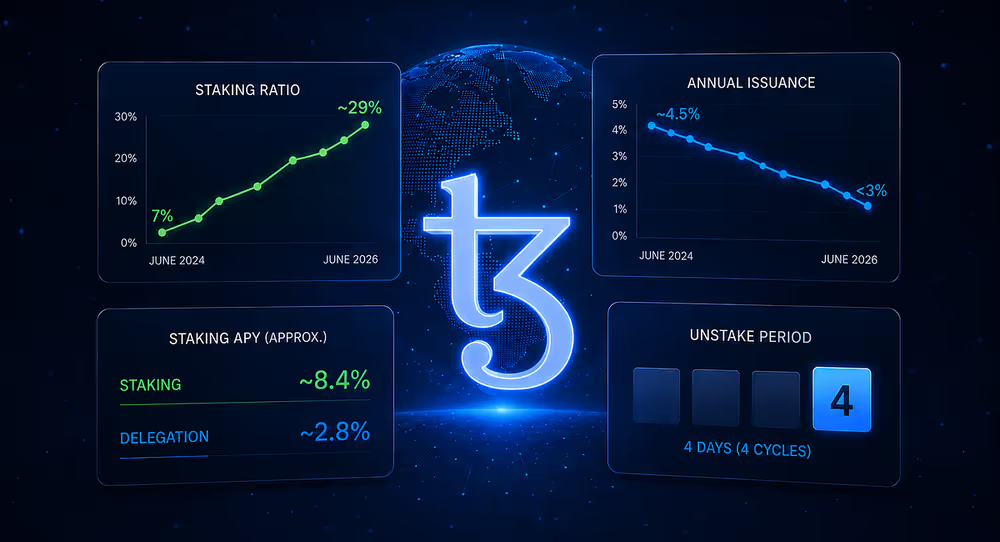
When the Paris protocol upgrade activated in June 2024, it introduced Adaptive Issuance and the new staking model, fundamentally changing how Tezos approaches staking rewards and issuance.
We’ve talked a lot about how the mechanism works over the past two years. But now that enough time has passed, I think it’s more interesting to look at the results.
Has staking participation actually increased? Has issuance started moving in the direction Adaptive Issuance was designed for? And where does Tezos staking stand today?
Let’s take a look at some numbers.
More Tez Is Being Staked Than Ever Before #
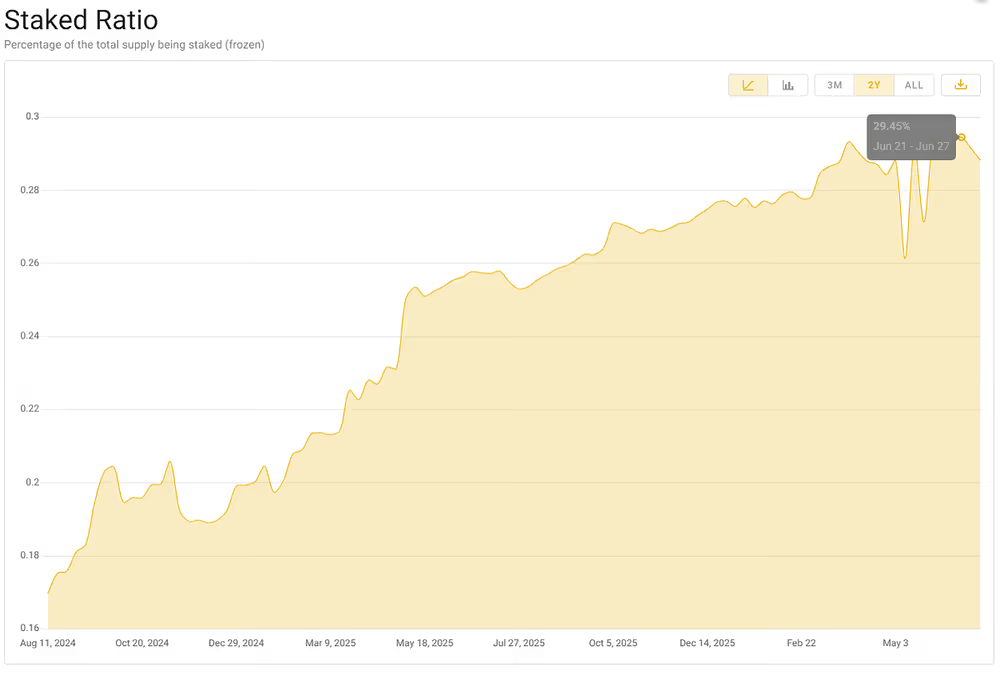
The most visible change over the past two years has been the steady increase in staking participation.
When the new staking model was introduced, only around 7% of the circulating supply was directly staked (locked). Today, that figure sits at ~29%, a fourfold increase that shows the gradual adoption of direct staking across the network.
Another milestone that has quietly gone under the radar is that, for the first time, more tez is now staked than delegated. While delegation remains an important way for holders to participate in network security, the balance is gradually shifting as more users choose to become stakers.
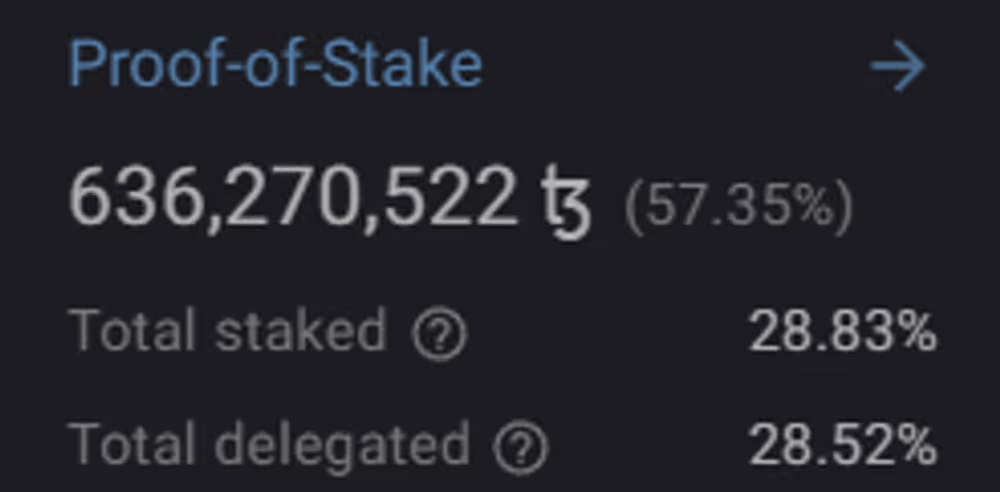
There’s another interesting detail behind these numbers. Over the same period, a growing amount of tez has also been bridged to Etherlink, where it currently doesn’t participate in Layer 1 staking or delegation. In other words, staking participation has continued to grow despite a portion of the supply being used elsewhere in the ecosystem.
Looking ahead, that dynamic will probably change as the proposed sTez liquid staking token aims to allow tez to remain staked while also being used within Etherlink’s (soon to be TezosX) ecosystem. If and when adopted, it will help reduce the trade-off between securing the network on Layer 1 and putting capital to work on Layer 2.
Issuance Is Below 3% for the first time #
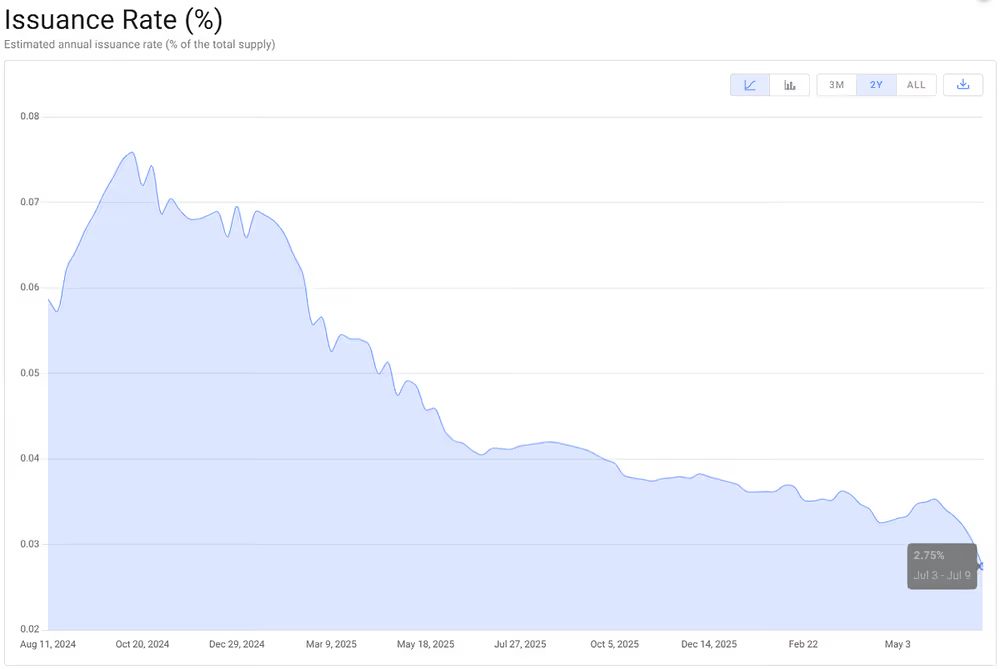
Before Adaptive Issuance was introduced, the issuance rate was at around 4.5% and when Adaptive Issuance was activated, the protocol increased it even more to encourage more holders to stake(lock) their tez. Now, with the constant increase of the staking ratio, those extra incentives gradually became less necessary, allowing issuance to come back down and reach the lowest it’s ever been.
Why does that matter? Simply put, it means fewer new tez are entering circulation. The supply is still growing, but it’s growing at a slower pace than before. That’s good news for the long-term economics of the network, as it reduces dilution while continuing to reward the people helping secure Tezos.
Of course, this isn’t a one-way street. If the staking ratio were to fall back again, Adaptive Issuance would respond by increasing incentives again. That’s exactly what makes the mechanism different from a fixed issuance model, it can adapt as the needs of the network change.
Staking Rewards Today #
What’s interesting, though, is that even though the issuance is at the lowest it’s ever been (and it keeps going down), the rewards for holders who stake, are still higher than what they were for delegators before Adaptive Issuance and the new staker role.
More specifically, rewards from delegation before Adaptive issuance, were at ~5.5%, and today, staking offers around 8.4% APY (delegation is around 2.8% APY), which means that even though the network is creating fewer tez per year, the holders can still earn more rewards than before.
Staking has also become more flexible. Since the Rio protocol upgrade, the unstaking period has been reduced to just 4 days (aka 4 cycles), making it much easier to move your funds if your plans change.
For anyone who hasn’t looked at staking in a while, today’s experience is very different from what it was two years ago. Rewards remain attractive, the unlocking period is much shorter, and support across wallets has continued to improve.
There’s Still a Lot of Passive Tez #
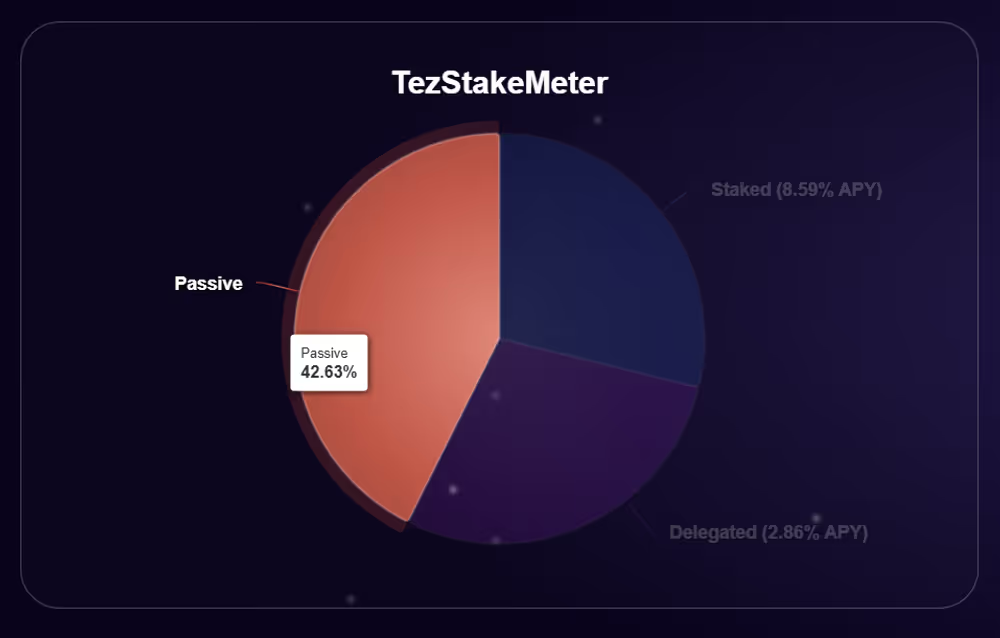
But one number we haven’t talked about yet is the amount of passive tez. Today, over 42% of the total supply is neither staked nor delegated. That’s a huge amount of tez sitting on the sidelines.
A good portion of that is likely sitting on exchanges. If that’s where you’re holding your tez, it’s worth thinking about moving it to a wallet you control and staking it yourself. Not only do you remain in full control of your funds, but you’ll most probably earn a bigger share of the staking rewards instead of giving a big part of them to the exchange.
And if your tez is already sitting in your own wallet, unstaked, you’re leaving both staking rewards and network participation on the table. So it might be a good time to check your staking setup again.
Whatever your situation is, I think every little bit of new staked tez helps. And with future solutions like sTez allowing users to stake while continuing to use their tez on Etherlink/TezosX, I believe we’ll get much closer to the 50% staking target than many people expect.
If you’re skeptical about that goal, I’d like to remind you that when Adaptive Issuance was first introduced, there were plenty of people who didn’t think we’d even reach a 20% staking ratio. Yet here we are, sitting just under 30%, and the trend has been moving in the right direction ever since.
So don’t overthink it. If you have unstaked tez sitting in your wallet that you don’t plan on using for a while, even if it’s just for a few weeks, go ahead and stake them!