TzEL and the Future of Blockchain Privacy
A closer look at Tezos' experimental post-quantum privacy rollup
7 minute read
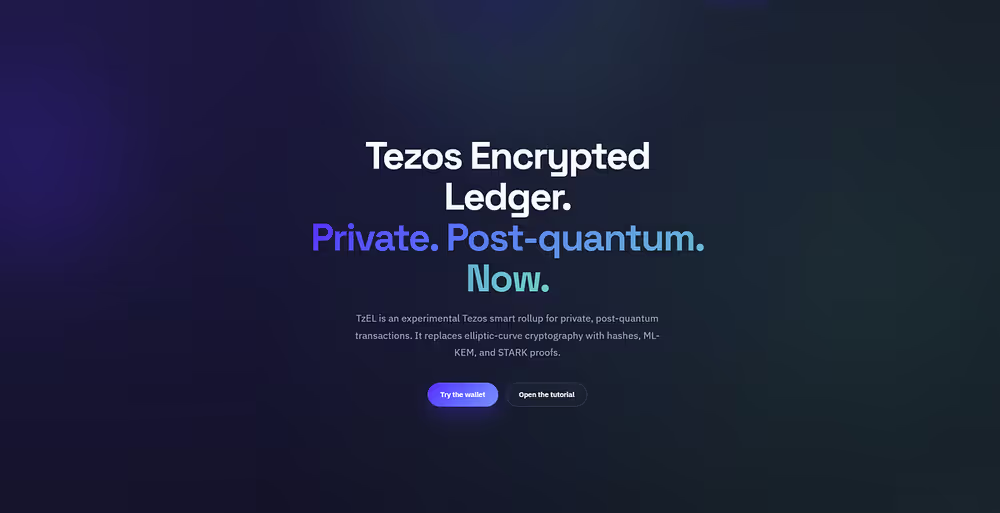
TzEL was announced recently as a new experimental privacy rollup on Tezos.
But if your first reaction was confusion after reading terms like “post-quantum,” “zk-STARKs,” “elliptic curves,” “detector keys,” and a bunch of other technical buzzwords… don’t worry, you’re definitely not the only one. That was pretty much my reaction too.
So I spent some time digging deeper to try to understand what TzEL actually is, what problem it’s trying to solve, how it works, and who it’s really for. And honestly, the more I looked into it, the more I realized this was approaching blockchain privacy from a very different angle.
At first glance, it’s easy to compare it to existing privacy systems like Sapling. After all, both involve shielded transactions and private transfers. But the core idea behind TzEL is actually a little different. TzEL is not just trying to make blockchain transactions private today. It’s experimenting with how blockchain privacy could still survive years from now in a world where quantum computing becomes a real threat.
But let’s take it from the start.
The Problem TzEL Is Trying To Solve #
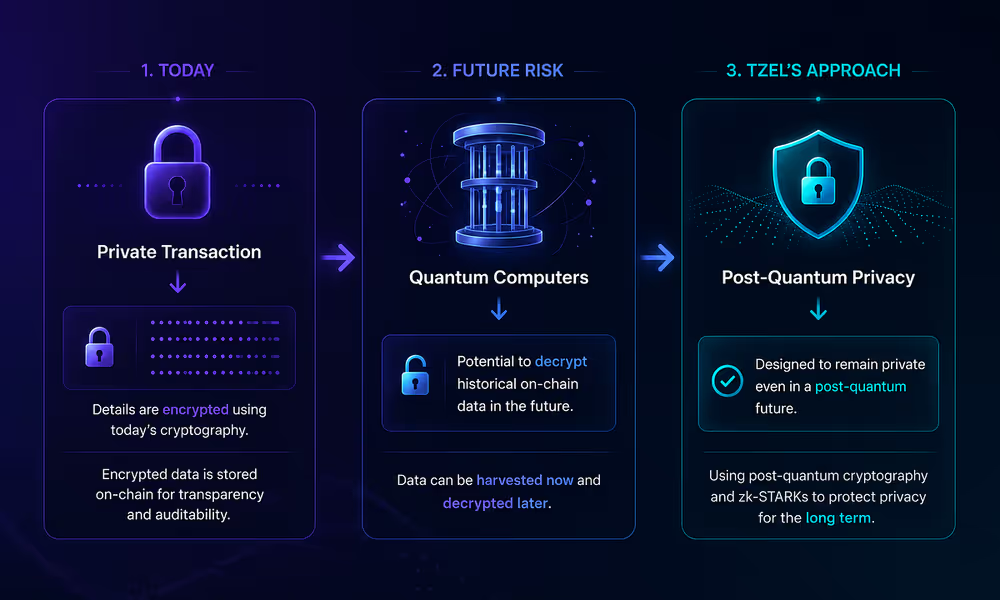
When people hear discussions around quantum computing and blockchains, it’s easy to assume this means all blockchain transactions are suddenly at risk of becoming visible in the future. But that’s not really what TzEL is about.
Normal blockchain transactions are already public. You can already inspect wallets, balances, and transaction history on-chain today. The real issue is with blockchain privacy systems themselves. Privacy-focused systems introduce encryption to hide transaction details, balances, memos, recipients, and other sensitive information from public view. And today, that encryption works well.
The problem is that blockchain data is permanent. Even if encrypted transaction data is secure today, it still lives on-chain forever. This creates a long-term problem often referred to as “harvest now, decrypt later.” The idea is fairly simple, someone may not be able to decrypt private transaction data today, but they could potentially collect and store encrypted blockchain data now and wait until quantum computers become powerful enough to break the cryptography protecting it years later.
And that’s really the core idea behind TzEL. Instead of only asking “how do we keep blockchain transactions private today?”, TzEL is exploring how blockchain privacy systems themselves could continue remaining private years from now, even after quantum computing becomes an everyday reality.
So What Exactly Is TzEL? #
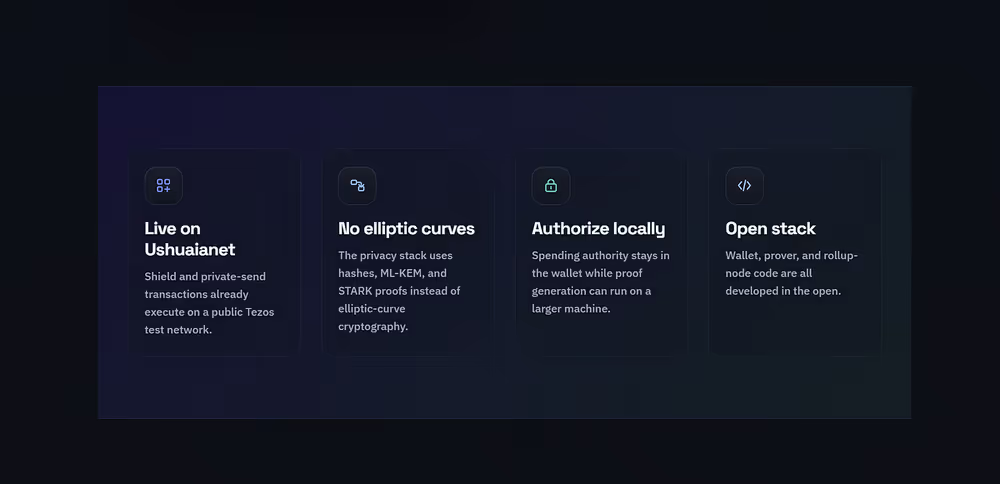
TzEL is an experimental private transaction rollup running on Tezos testnet and, as far as we know, one of the first live blockchain experiments specifically exploring private transactions designed for a post-quantum future.
Users can shield tez into the rollup, transfer them privately, and later unshield them back to Layer 1. The project also experiments with encrypted memos, viewing keys, detector keys, and delegated proving. Now, some of those terms can sound intimidating at first, but the general idea is actually pretty practical. TzEL is designed around selective disclosure rather than full transparency, meaning users can keep transactions private by default while still having ways to reveal specific information when needed.
What also makes TzEL interesting is that this is not just a cryptography paper or isolated proof-of-concept. The project already includes a working rollup stack, wallets, bridging flows, proving infrastructure, and tooling that developers can experiment with directly on testnet. The broader stack is also being developed openly, including the wallet, prover, and rollup node infrastructure.
Under the hood, TzEL uses a different cryptographic approach than most blockchain privacy systems today. Instead of relying on elliptic-curve cryptography, which is commonly used across much of the blockchain industry, the project experiments with post-quantum cryptography and zk-STARK proofs designed to resist future quantum attacks.
Now, this is the point where things can start getting very technical very quickly, so I don’t want to go too deep into the cryptography side of things in this article. For people interested in digging deeper into the architecture, proof systems, and technical design behind TzEL, I’ll link to the documentation towards the end. The important takeaway here is simply that TzEL is taking a first step toward building private blockchain transactions designed for a post-quantum future from the ground up.
What Made TzEL Possible on Tezos? #
Let’s talk about another interesting thing that quickly became obvious. This is the kind of experiment that probably would not fit very naturally on most blockchains today. A big reason for that comes down to proof sizes. The zk-STARK proofs used by TzEL are huge compared to what most blockchain systems normally handle, reaching around 300KB per transaction. And while that may not sound massive at first glance, on-chain data adds up very quickly. On many networks, trying to push that amount of data directly through Layer 1 repeatedly would become difficult, expensive, or simply impractical. That’s where Tezos starts becoming a very interesting environment for something like this.
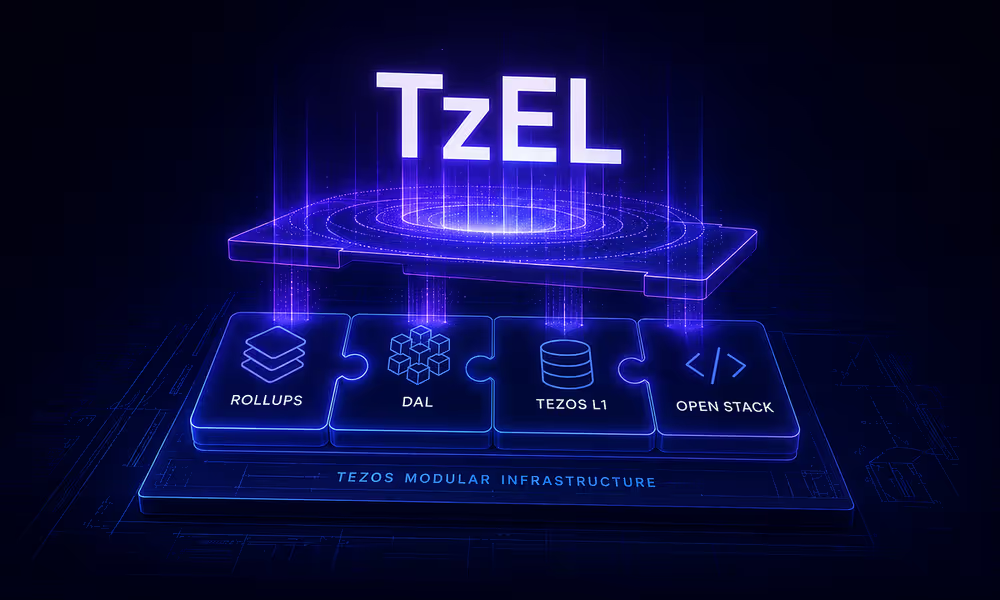
Instead of forcing all of that heavy proof data directly onto Layer 1, TzEL can take advantage of Tezos’ rollup architecture and the Data Availability Layer (DAL), which was designed specifically to help handle much larger amounts of data more efficiently. And honestly, I think this is one of the more interesting parts of the project overall because it turns some of Tezos’ infrastructure upgrades from “nice theory” into something much more tangible.
Features like rollups and the DAL can sometimes feel abstract when people talk about them. You hear terms like scalability, modular infrastructure, or data availability, but it’s not always easy to picture what those things actually enable in practice. TzEL is a pretty good example of that in action.
It’s not just experimenting with post-quantum privacy itself, but also showing how the infrastructure Tezos has been building over the past few years can open the door for entirely different kinds of blockchain applications and research experiments that would otherwise be much harder or impossible to run.
Still Early, But Worth Exploring #
It’s important to stress that TzEL is still experimental research code and not something intended for production use or real value transactions right now. The project is currently a live prototype focused on experimentation, testing, and research around post-quantum privacy systems.
But honestly, that’s also what makes it interesting. A lot of conversations around post-quantum blockchain security stay theoretical. TzEL turns some of those ideas into something developers can actually interact with today. And this is not just a standalone cryptography demo either. The project already includes a working rollup stack, wallets, bridging flows, proving infrastructure, and tooling for experimentation on testnet.
For developers and builders interested in digging deeper, the documentation, whitepaper, tutorials, and source code are all publicly available through the TzEL GitHub repository. You can also learn more through TzEL’s website.
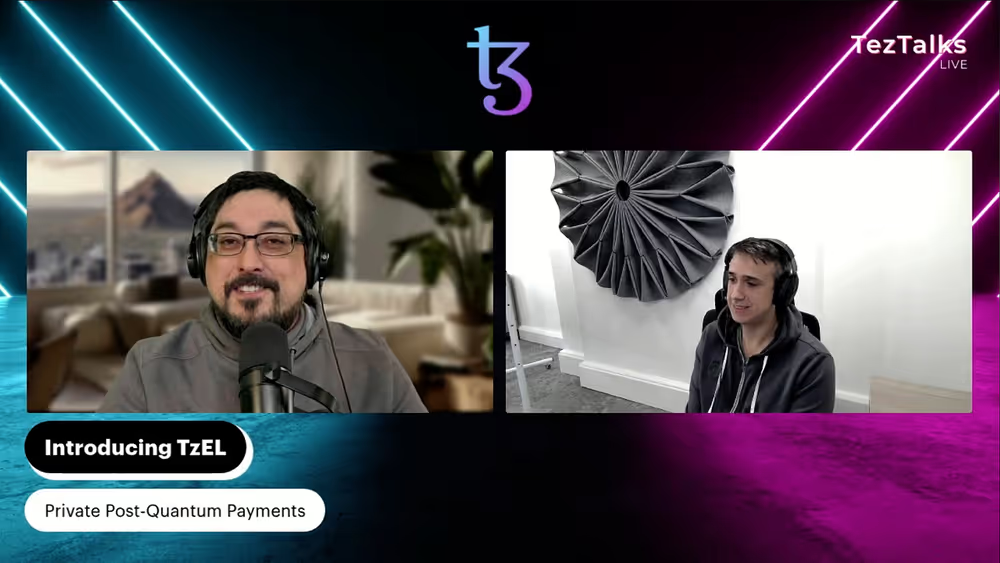
And if you want a deeper breakdown of the thinking behind the project, we recently released a TezTalks interview with Arthur Breitman focused entirely on TzEL, post-quantum privacy, and some of the design decisions behind the project.
Even in its current early form, TzEL offers a pretty interesting glimpse into where long-term blockchain privacy research may be heading, while also giving builders something real they can already start experimenting with today.