What Comes After Tokenization?
What it takes to turn a tokenized asset into a real market, and how xU3O8 is getting there.
7 minute read
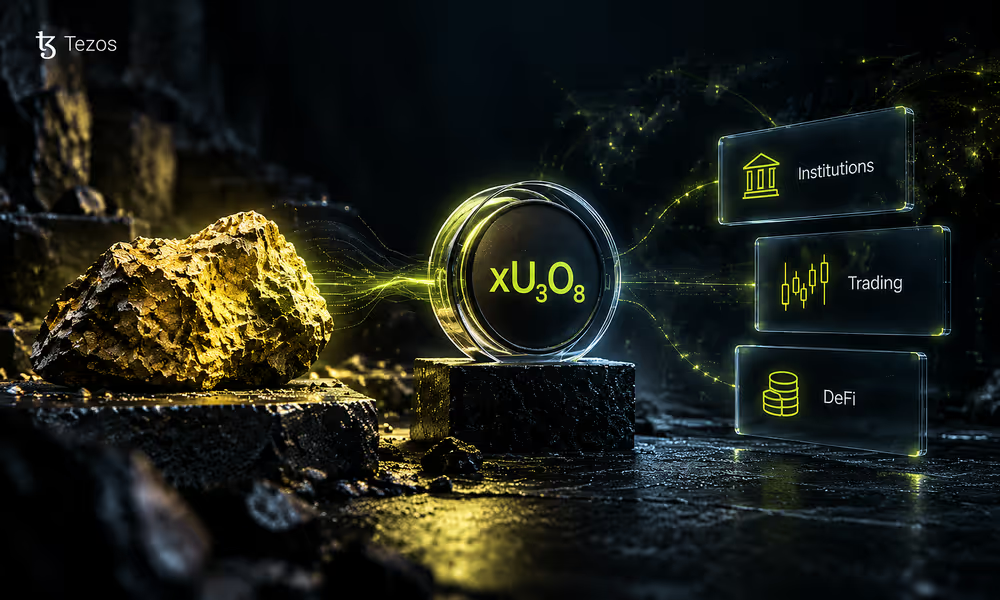
I will start by saying that tokenizing uranium is not a small thing. You are dealing with a physical commodity that sits in regulated storage, a trustee structure for ownership, and a token that has to reliably match that reality onchain. I’m sure that getting xU3O8 live in late 2024 took real and hard work. And with it live, for the first time, people who weren’t already deep in that market could get exposure without needing giant lot sizes or dealing with all the friction normally associated with that asset.
But once the token exists, more questions follow. Who can actually hold it? Where can you trade it? What can you do with it beyond buying and sitting on it? A token that represents real uranium is impressive. The harder question is how you get people to actually adopt it.
So in this article, I want to look at how that adoption path has been forming around xU3O8 since launch. Custody. Exchange access. Lending. And what those pieces look like when you put them all together.
What is actually being tokenized? #
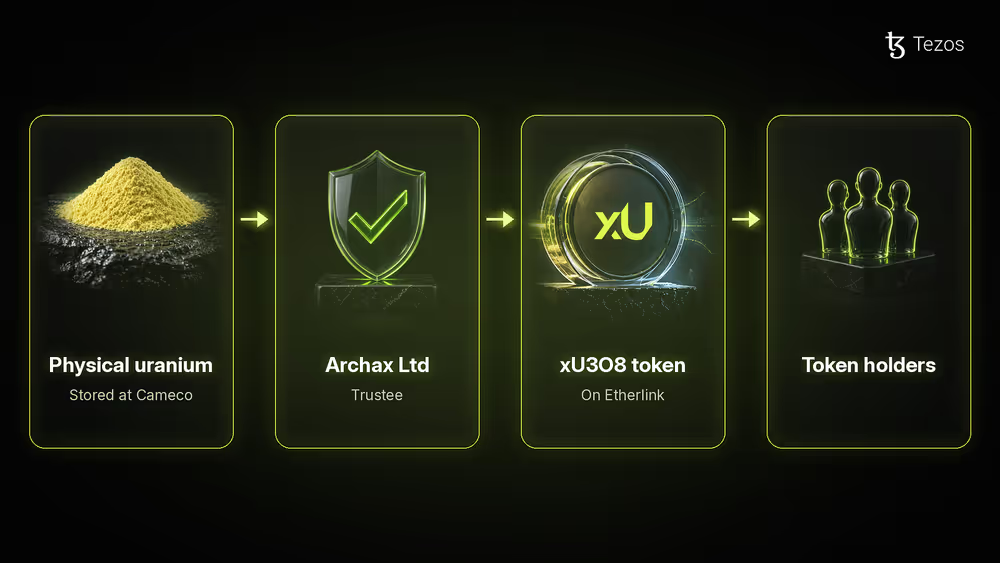
Before we get into the pieces built around it, it helps to be clear about what xU3O8 is. The token is obviously not the uranium itself. It is a record of beneficial ownership of physical uranium oxide, U3O8, stored at a regulated Cameco facility and held in the account of Archax Ltd as trustee. Proof of reserves is updated regularly with Cameco statements, so the onchain token stays tied to something you can verify exists in the real world.
That part is important because this is part of the hard work I mentioned earlier that sits behind the token. Storage, trusteeship, and ownership are a must before anyone even starts thinking about adoption.
Who can hold it? #
Once the uranium is stored and accounted for, the next question is a simple one. Who can hold the token?
For individuals, the answer is pretty much anyone with a wallet, but for institutions, it’s a different story. A fund or a treasury desk can’t just keep millions in a browser extension. They need a regulated custodian that holds the digital asset for them, the same way the uranium itself sits with Cameco.
Two names matter here. Hex Trust, a regulated custodian with licenses in hubs like Hong Kong, Singapore, Dubai and Italy, added support for Etherlink and xU3O8 in August 2025. Anchorage Digital, the first federally chartered crypto bank in the US, followed in September 2026. So now there are two layers of custody: Cameco and Archax for the physical uranium, and custodians like Hex Trust and Anchorage for the token that represents it. That means a fund or company can hold xU3O8 the same way it holds other digital assets, with a custodian it already knows and trusts.
Where can you trade it? #
Talking about who can hold it, we covered institutional custody, but we didn’t mention how everyone else can access it. When xU3O8 launched, it was available on Uranium.io, but in its first year, it made its way to exchanges like KuCoin and MEXC.
But the big one came on July 30, 2026, with the Kraken announcement of the xU3O8 listing. It wasn’t the first exchange to list it, but I think it’s the most important one so far, because Kraken is one of the most trusted names in crypto and it puts xU3O8 in front of a much bigger audience.
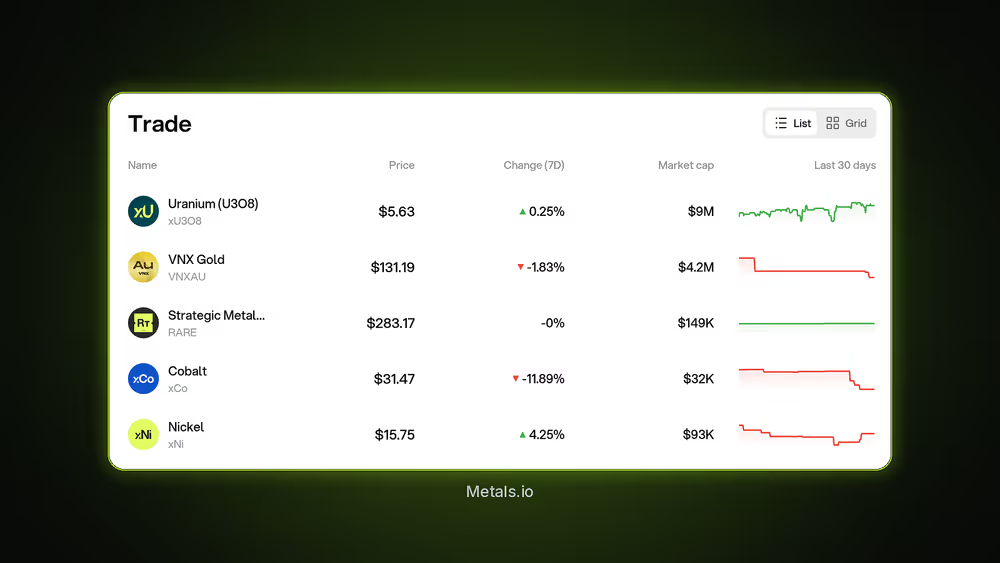
And exchanges aren’t the only way in. It’s also worth mentioning that, back in March, Uranium.io evolved into Metals.io, which means xU3O8 can now be traded alongside other metals like gold, nickel, and cobalt, with users managing their whole metals portfolio in one place. On top of that, with debit and credit card purchases, people no longer need to get USDC or deal with a wallet first, which makes it even easier for everyday investors. If you want to know more about that, you can check my “Metals.io Is Positioning Itself as the Go-To Platform for Tokenized Commodities” article.
Can you do anything beyond buying and holding? #
So we have the tokenized asset, and we have access for both institutions and everyday people, which is already a big deal. But it shouldn’t stop there. For an asset to really get interesting, it needs more utility, and this is where DeFi comes in.
In November 2025, xU3O8 was added as collateral to a Morpho lending market, first through Oku and now through Monarch. Holders can supply their xU3O8 and borrow USDC against it, so they get cash without selling their uranium exposure. This moves xU3O8 from a simple buy-and-hold asset to something you can actually build investment strategies around.
Putting the pieces together #
So here we are, with xU3O8 having launched as a simple tokenized asset and, in under two years, having built a lot of the infrastructure it needs, creating a whole market around it. Add to that that the team behind Uranium.io joined the World Nuclear Association and took part in its Symposium in London in both 2025 and 2026, along with a few nominations and awards for innovation. Taking all that into account, you can easily see that their efforts don’t go unnoticed, and the nuclear industry has started to take notice as well.

But the efforts don’t stop there. With all those pieces in place, the team has started promoting Metals.io much more broadly as well. The most recent example is the ads going live across the London Underground this October (and I have to say, I find them genius), which put it in front of everyday commuters and not just people who already follow crypto.
With all that said, and with the current interest around RWAs, I can’t help but feel very optimistic about the future of tokenized uranium on Tezos. The benefits for institutions already in the uranium industry are probably different, and more, than the ones we talked about here (things like logistics, storage, and transparency, which we could probably do another article on), so I really wouldn’t be surprised at all if we started hearing about them actually adopting xU3O8 soon.